
High-Dose Flu Shot and Alzheimer's: What the Evidence Shows, and Who Should Ask
A Neurology study links the stronger vaccine to lower Alzheimer's risk, but it is observational, and the size of the effect is unsettled.
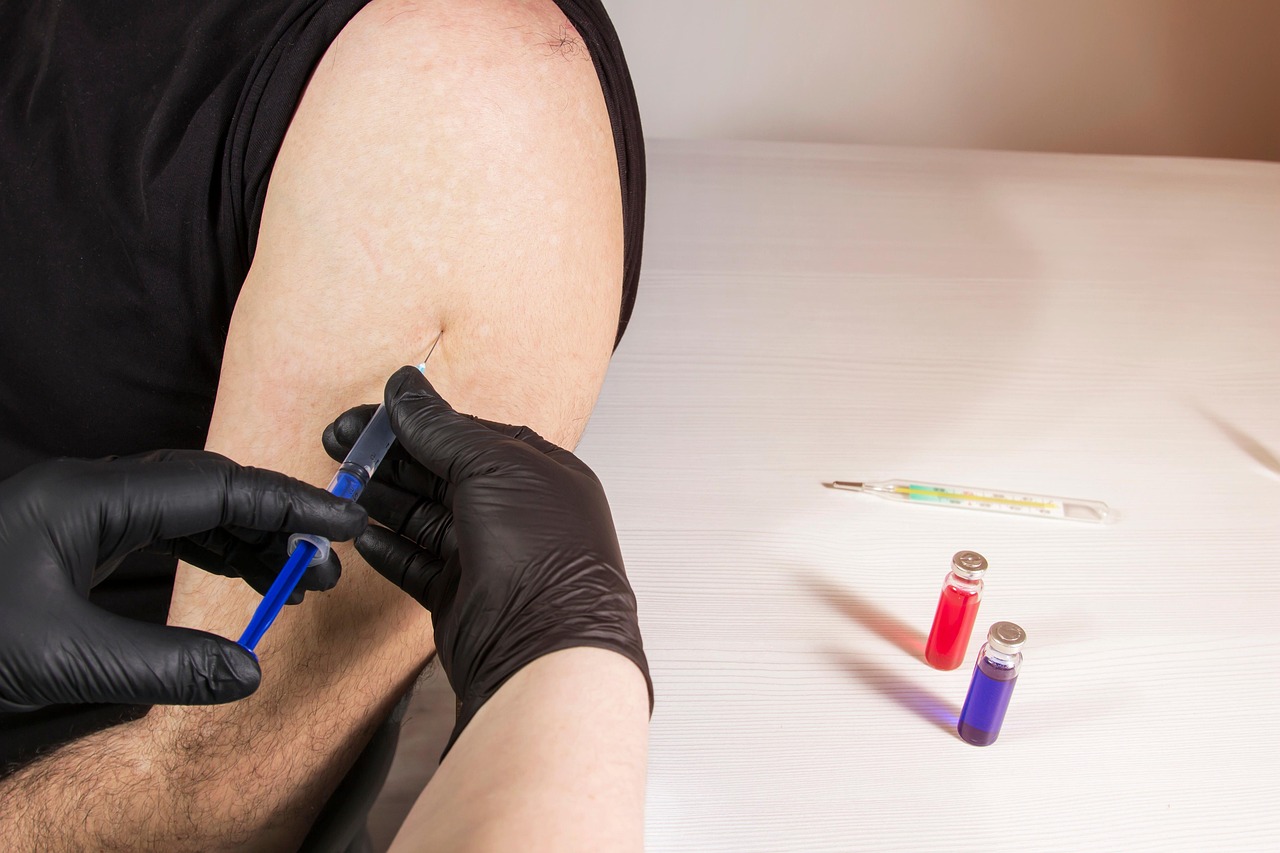
A study in Neurology found that older adults who received the high-dose flu vaccine had a lower rate of Alzheimer's diagnoses than those who received a standard dose. The design shows an association, not prevention, and the headline 55% figure could not be verified. The CDC already prefers high-dose, recombinant or adjuvanted vaccines for people 65 and older, based on flu protection.
A study in the journal Neurology reports that older adults who received the high-dose flu vaccine were diagnosed with Alzheimer's dementia less often over the following years than those who received a standard-dose shot. Coverage this month, much of it built on a UTHealth Houston press release dated Nov. 7, described the result as greater protection for the brain. The evidence supports a narrower statement: an association found in insurance claims data, not proof that the vaccine prevents the disease.
The distinction matters in flu-shot season, when many people 65 and older are deciding which vaccine to request. The CDC already prefers three types of vaccine for that age group, high-dose among them, but its preference rests on protection against influenza. Nothing found in the research for this article shows the CDC cites Alzheimer's prevention as a reason.
What the Neurology study did, and when it appeared
The study is not as new as the November coverage suggests. The paper was published in Neurology, and Harvard Health reported on it as appearing April 28, 2026. The Nov. 7 date belongs to a UTHealth Houston press release carried by ScienceDaily, and trade outlets such as Contagion Live and NeurologyLive ran interviews on Nov. 9 through 11. No new data emerged this month.
The design
According to the paper's abstract and full text, the researchers used US insurance claims from the IQVIA PharMetrics Plus for Academics database, covering 2014 through 2019. They asked about the three-year risk of a first Alzheimer's diagnosis after high-dose versus standard-dose vaccine (non-adjuvanted, non-recombinant) in adults 65 and older. Alzheimer's dementia was defined from claims, meaning a diagnosis code or a prescription for an Alzheimer's drug.
The approach is called target trial emulation: an observational data set is structured to mimic the randomized trial that would ideally have been run. A news report on the paper describes 21 sequential monthly cohorts, with inverse probability of treatment weighting based on propensity scores, a technique that tries to balance measured differences between the two groups. The sample is counted as 185,183 high-dose and 53,918 standard-dose person-trials, a unit in which one person can appear more than once.
Outlets count participants differently. Harvard Health reported about 121,000 high-dose and 44,000 standard-dose recipients, CIDRAP roughly 165,000 people, and the press release nearly 200,000. These reflect different counting units rather than conflicting facts.
The findings
According to the PubMed abstract, high-dose vaccination was associated with significantly lower Alzheimer's risk during months 1 through 25 after the shot. The minimum number needed to treat was 185.2 at 25 months, meaning that at best roughly 1 case would be prevented for every 185 people vaccinated. A news report on the paper adds that stricter case definitions and lag periods still showed reduced risk, with one number needed to treat of 148 at 28 months, though that detail rests on a single secondary source.
The pattern differed by sex. The reduction lasted longer in women, months 1 through 13, with a minimum number needed to treat of 416.7. In men the reduction appeared in months 17 through 24 and was significant only in the intention-to-treat analysis, with a minimum of 232.6. These are minimums within time windows, not overall figures for each sex.
One result complicates a simple story about a stronger immune response. The paper reports no significant effect for the adjuvanted vaccine (Fluad) compared with standard dose in its per-protocol results. Fluad is another vaccine designed to provoke a bigger immune reaction, so its null result is hard to square with that explanation, although it was a smaller comparison and its numbers were not retrieved for this article.
The 55% figure and the 40% figure do not share a scale
The press release headline, carried by ScienceDaily, says the stronger shot was linked to nearly 55% lower Alzheimer's risk. It also sets that beside a 40% figure for standard-dose vaccination. The two numbers come from different studies, with different comparison groups and different data. The 40% comes from a 2022 study that compared vaccinated people with unvaccinated people, while the new study compared two kinds of vaccine with each other.
The 55% figure itself is unresolved. It could not be traced to the paper's tables in the reporting for this article. A secondary summary from MedicalBrief reports per-protocol risk ratios from 0.78 at month 1 to 0.89 at month 25, which would mean roughly 11% to 22% lower risk. That is a considerably smaller relative effect than the headline, and until the paper's tables or its authors reconcile the two, the magnitude should be treated as uncertain.
Confidence intervals for the main estimates, the exact baseline Alzheimer's rates, and the authors' funding and conflict-of-interest statements were also not retrieved. Each would help a reader judge the result.
Why an association is not proof of protection
The study is observational, and the authors acknowledge limits that apply to any claims-based analysis. They accept that target trial emulation does not overcome data set problems such as measurement error or residual confounding, meaning differences between groups that the data never captured. Several specific weaknesses stand out.
- Unmeasured differences. The data lack education, income, lifestyle, biomarkers and mortality. Which dose a person receives can depend on the pharmacy, clinic, region, insurer and the person's health-seeking habits, and weighting balances only what was measured.
- Short follow-up. Follow-up was three years or less, while Alzheimer's has a long preclinical phase. A signal over two to three years may reflect who is diagnosed sooner rather than who develops the disease, which the authors acknowledge.
- Imperfect outcome measure. Diagnosis codes and Alzheimer's prescriptions are proxies for the disease, not confirmed diagnoses.
- Missing deaths. Without mortality data, any difference in survival between the groups could distort the comparison. One report says this may mean Alzheimer's risk was underestimated.
- Representativeness. The sample comes from a commercial claims database, and one news summary notes that seniors are underrepresented. How many Medicare beneficiaries are included was not confirmed.
The absolute difference is also small. A minimum number needed to treat of 185 means that, at best, about 1 diagnosis was avoided per 185 people vaccinated over roughly two years, assuming the link is causal, which the design cannot establish.
Preventing flu, or something else?
The authors say further research is needed to tell whether the difference reflects protection against influenza infection or non-infection-related mechanisms. The study cannot separate the two. A related analysis suggests that flu infection strongly predicts an Alzheimer's diagnosis within a year, but it comes from a different study with reverse-causation caveats. Commentators have also proposed a cardiovascular pathway, which remains a hypothesis and was not demonstrated here.
Nearly all of the coverage, from ScienceDaily, CIDRAP, Harvard Health and NeurologyLive, traces back to this one paper and its press release, so the articles are not independent confirmations. The same research group also produced the 2022 study. A neurologist interviewed by Contagion Live and NeurologyLive said that no study has yet shown that a vaccine reduces or eliminates a person's risk of developing dementia, and that the shingles (herpes zoster) vaccine is probably the best studied in this area.
How earlier research fits
The idea that flu vaccination relates to dementia risk predates this paper. A 2022 claims-based study in the Journal of Alzheimer's Disease, by UTHealth researchers, matched 935,887 vaccinated adults 65 and older with 935,887 unvaccinated adults free of dementia. The vaccinated group was 40% less likely to develop Alzheimer's over four years. A 2026 review paper reports that this corresponds to an absolute risk reduction of 3.4% and about 29 people vaccinated per case avoided, a figure Jaroha could not check against the original.
The same review cites a 2023 meta-analysis of observational cohorts covering about 2.1 million people followed for 4 to 13 years, with a pooled risk ratio of 0.69 (95% confidence interval 0.57 to 0.83). The meta-analysis itself was not retrieved, so that figure is second-hand. A 2024 UK Biobank cohort in npj Vaccines, with 70,938 participants of whom 38,328 were vaccinated, found flu vaccination associated with reduced incident dementia but not with Parkinson's disease.
| Study | Comparison | Population | Follow-up | Headline result |
|---|---|---|---|---|
| Bukhbinder 2022, J Alzheimers Dis | Vaccinated vs unvaccinated | 935,887 matched pairs, US adults 65+ | About 4 years | Risk ratio about 0.60 (40% lower); absolute risk reduction 3.4% (via secondary review) |
| UK Biobank 2024, npj Vaccines | Vaccinated vs unvaccinated | 70,938 participants aged 60+ | Not retrieved | Lower dementia risk; no Parkinson's association |
| 2023 meta-analysis (via 2026 review) | Vaccinated vs unvaccinated | About 2.1 million | 4 to 13 years | Pooled risk ratio 0.69 (95% CI 0.57 to 0.83) |
| Neurology 2026 | High-dose vs standard-dose | 185,183 vs 53,918 person-trials | Up to 3 years | Risk ratio 0.78 to 0.89 (per-protocol, via secondary report); number needed to treat 185 at 25 months |
The studies point in a consistent direction, but they share a design type and its weaknesses. The UK Biobank work concerns vaccination in general, not dose, so the only independent strand of evidence does not address the high-dose question at all.
What randomized trials show about high-dose vaccine
No randomized trial of any flu vaccine with dementia as the outcome turned up in the research for this article, though the search was not exhaustive. Randomized trials of high-dose vaccine do exist, but they measure flu-related outcomes, mainly hospitalization. Their results bear on whether the stronger shot is better at its main job.
DANFLU-2, a Danish trial in adults 65 and older published in the New England Journal of Medicine and funded by Sanofi, did not find a significantly lower rate of hospitalization for influenza or pneumonia with high-dose vaccine. Influenza hospitalization itself occurred in 0.06% of the high-dose group and 0.11% of the standard-dose group. The authors note the main result is inconsistent with earlier meta-analyses showing a 23.5% lower incidence of influenza or pneumonia hospitalization.
GALFLU, a trial in Galicia, Spain, also published in the journal, enrolled 67,093 people in one arm and 66,789 in the other. Its NEJM page reports a 23.7% relative reduction in influenza or pneumonia hospitalization with high-dose vaccine, with pneumonia hospitalization at 0.17% versus 0.21%. The difference was partly driven by the influenza component coded in hospital records, and the relative effectiveness against lab-confirmed influenza hospitalization was 19.5%.
A 2026 systematic review in Viruses concluded that the two trials showed consistent reductions in influenza-specific hospitalization, about 0.4 to 0.5 fewer per 1,000 vaccinated. It also found that effect sizes for broader outcomes were small and that endpoint definitions differed between trials. An earlier Danish feasibility trial, DANFLU-1, enrolled 12,477 people aged 65 to 79 and reported an incidence rate ratio of 0.30 for pneumonia or influenza hospitalization (95% CI 0.14 to 0.64). It was designed to test feasibility, not clinical endpoints, and the numbers were small.
The CDC's own evidence review notes that few randomized trials compared higher-dose and adjuvanted vaccines with standard dose in non-pandemic seasons. It judged the overall evidence to suggest a potential benefit. Taken together, the benefit of high-dose vaccine against flu appears real but small in absolute terms, and the trial results are mixed.
Who should ask for a high-dose shot
According to the CDC, the agency and its advisory committee preferentially recommend higher-dose vaccines (high-dose inactivated and recombinant) or adjuvanted inactivated vaccine over standard-dose, unadjuvanted vaccine for people 65 and older, describing them as potentially more effective. Because high-dose vaccine is approved only for people 65 and older, the new study offers no reason to seek it earlier, and no Alzheimer's evidence exists for younger people.
For adults in that age group, the practical question is therefore which of the preferred vaccines is available, not whether the Alzheimer's finding tips the balance. The American Academy of Family Physicians' 2026–27 guidance likewise supports preferential use of high-dose, adjuvanted, recombinant or mRNA vaccines over standard dose. It lists a new mRNA vaccine, mFLUSIVA, as available for adults 50 and older, while the CDC's interim considerations are silent on it.
Timing and availability
The CDC says everyone should ideally be vaccinated by the end of October. It adds that most older adults should not be vaccinated early, in July or August, because protection may decrease over time. Mid-November is still within the flu season. A news explainer reports that if none of the three preferred vaccines is available, the CDC says to use another age-appropriate flu vaccine, a point worth confirming in the CDC's clinical guidance.
Immunize.org reports that the July 2025 CDC schedules remain in effect for 2026–27 under federal court orders halting implementation of votes taken by the advisory committee after its membership changed in June 2025. Because that source is an advocacy-education group and guidance is in flux, current CDC pages are the authority to check.
On safety, the neurologist interviewed by NeurologyLive and Contagion Live said fever was somewhat more common with high-dose vaccine but serious adverse events were not increased. That is a single expert's statement, and the primary safety data were not retrieved. People with an egg allergy or a prior vaccine reaction should consult the CDC's contraindication guidance and a clinician. Medicare coverage, cost and pharmacy availability of high-dose vaccine were also not retrieved.
What the finding means, and what would settle it
The Neurology study adds a plausible, unproven thread to a body of observational work linking flu vaccination to lower dementia diagnoses. It does not change the reason older adults are advised to get a preferred vaccine, which is protection against influenza and its complications. A brain benefit, if real, would be a bonus that no trial has yet confirmed.
Settling the question would take a randomized trial with long cognitive follow-up, or an extension of registry-based trials like DANFLU to dementia outcomes, ideally with mortality data and negative-control outcomes. Until then, the useful reading of the headline is a cautious one: a promising association, a modest absolute difference, and a number that still needs to be reconciled with the paper itself.
Frequently asked questions
Does the high-dose flu shot prevent Alzheimer's disease?
That has not been shown. A 2026 Neurology study of insurance claims found an association between high-dose vaccine and fewer Alzheimer's diagnoses than standard dose, but it is observational and cannot prove prevention. No randomized trial of any flu vaccine has tested dementia as an outcome.
Is the 55% lower Alzheimer's risk figure reliable?
It is unverified. The figure comes from a press release and could not be traced to the paper's tables. A secondary summary reports per-protocol risk ratios of 0.78 to 0.89, or roughly 11% to 22% lower risk, so the size of the effect is uncertain.
Who is the high-dose flu vaccine approved for?
It is approved for people 65 and older. The CDC preferentially recommends high-dose, recombinant or adjuvanted vaccines for that age group over standard-dose, unadjuvanted vaccine, based on flu protection rather than Alzheimer's prevention.
Is it too late to get a flu shot in mid-November?
No. The CDC says ideal timing is by the end of October, but mid-November is still within the flu season. The CDC advises most older adults against vaccinating as early as July or August because protection may decrease over time.
Does the high-dose vaccine cause more side effects?
A neurologist interviewed by NeurologyLive and Contagion Live said fever was somewhat more common with high-dose vaccine but serious adverse events were not increased. That comes from a single expert, and the primary safety data were not reviewed here, so a clinician or pharmacist is the best source for individual concerns.
Sources (20)
- Risk of Alzheimer Dementia After High-Dose vs Standard-Dose Influenza Vaccination (PubMed record) , Neurology / National Library of Medicine (2026-04-28)
- Risk of Alzheimer Dementia After High-Dose vs Standard-Dose Influenza Vaccination (PMC full text) , Neurology / PubMed Central (2026-04-28)
- Stronger flu shot linked to nearly 55% lower Alzheimer's risk , ScienceDaily (UTHealth Houston press release) (2026-11-07)
- High-Dose Influenza Vaccination Linked to Lower Alzheimer Dementia Risk in Older Adults , NeurologyLive
- Examining High-Dose Influenza Vaccination and Alzheimer Disease Risk , Contagion Live (2026-11-09)
- High-dose flu shot may lower risk of Alzheimer's , Harvard Health (2026-05-14)
- High-dose flu vaccine tied to lower Alzheimer's risk in older adults , CIDRAP
- High-dose flu shots may lower Alzheimer's risk , MedicalBrief
- Risk of Alzheimer's Disease Following Influenza Vaccination: A Claims-Based Cohort Study Using Propensity Score Matching , Journal of Alzheimer's Disease / National Library of Medicine (2022-06-24)
- Prospective cohort study evaluating the association between influenza vaccination and neurodegenerative diseases , npj Vaccines (2024-03-02)
- From breath to brain: influenza vaccination as a pragmatic strategy for dementia prevention , Aging Clinical and Experimental Research (2026-01-01)
- High-Dose Influenza Vaccine Effectiveness against Hospitalization in Older Adults (DANFLU-2) , New England Journal of Medicine (2025-12-11)
- High-Dose Influenza Vaccine to Reduce Hospitalizations (GALFLU) , New England Journal of Medicine
- Effect of high-dose vs. standard-dose quadrivalent influenza vaccine on death and hospitalizations in older adults with cardiovascular disease: a prespecified analysis of the DANFLU-1 study , European Heart Journal (supplement abstract)
- Enhanced Influenza Vaccines in Older Adults: A Systematic Review of High-Dose, MF59-Adjuvanted, and mRNA-Based Vaccines , Viruses
- Flu and People 65 Years and Older , Centers for Disease Control and Prevention
- Interim Clinical Considerations for the Use of Seasonal Influenza Vaccines in the United States , Centers for Disease Control and Prevention
- Evidence to Recommendations (EtR) Framework: Higher Dose and Adjuvanted Influenza Vaccines for Persons Aged ≥65 Years , Centers for Disease Control and Prevention
- Ask The Experts About Vaccines: Influenza , Immunize.org
- 2026-2027 influenza, RSV and SARS-CoV-2 immunization recommendations , American Academy of Family Physicians