
How to Spot Fake Retailer Sites and Malicious QR Codes Before Black Friday
Official advice centers on checking the seller, the link and the payment method, but much of the 'surge' data is a year old and comes from security vendors.
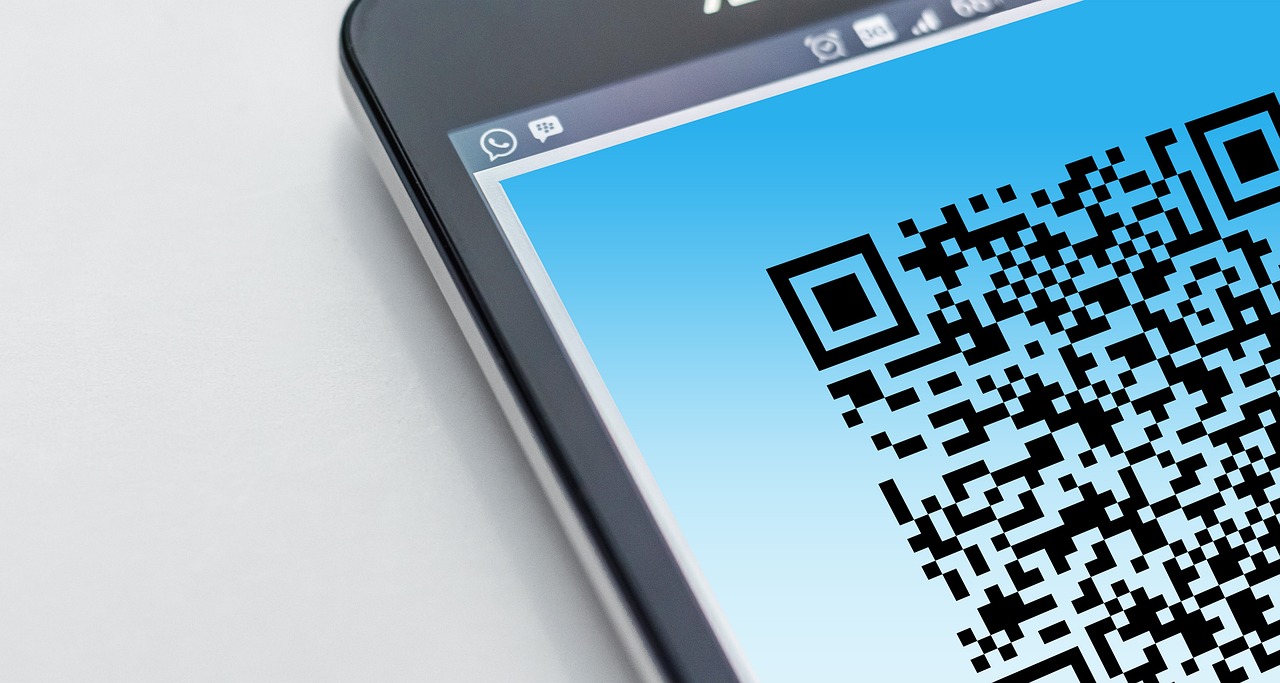
Fake online stores are short-lived, increasingly built with AI and hard to recognize by sight, according to 2026 industry data. QR-code scams are real, but the evidence tying them to Black Friday is thin. This guide separates what the FTC and FBI advise from what vendors claim.
Spotting a fake store or a malicious QR code before Black Friday comes down to checking the seller, the link and the payment method, not judging how a site looks. A Visa risk officer for North America has said very few consumers could look at one of these stores and immediately recognize a scam, according to a Detroit Free Press report. The advice from federal agencies is built around that problem: verify first, pay in a way that can be reversed, and treat unexpected prompts with suspicion.
Black Friday falls on November 27, the day after Thanksgiving, and early deals are already live. Security companies are warning about lookalike Amazon sites and booby-trapped QR codes. The evidence behind those warnings is uneven: many of the domain counts date from November 2025, and the FBI's QR-code alerts are general rather than tied to the shopping season. This article labels each figure by year and source so readers can see how much weight it can bear.
How big the problem is, and what the numbers measure
The broadest official figure is about fraud in general, not shopping. A Federal Trade Commission official told Congress on March 25, 2026, that the agency received 3 million fraud reports in 2025, with $15.9 billion in reported losses, up from $12.5 billion in 2024. That testimony was reported by outlets including Finextra and PYMNTS.
Those totals reflect what consumers chose to report, so actual losses are probably higher. A rising count can also mean more people know where to file a complaint. Imposter scams were the most frequently reported category in 2025, at about 1 million reports and $3.5 billion, while investment scams produced the largest dollar losses. The research did not turn up a 2025 loss figure specific to online shopping.
Older FTC data gives some sense of shopping's place in the mix. In the agency's 2023 data release, online shopping was the second most commonly reported fraud category, behind imposter scams. Separately, TheStreet reported that Americans lost $470 million in 2024 to scams that began with a text message, more than five times the 2020 amount.
How fake stores work, and why they are hard to catch
What 2026 data shows
The most current dataset comes from Scamwise, a tool made by Savi Security. According to a company report relayed by a syndicated news story, it analyzed more than 250,000 shopping sites that people submitted between March and October 2026. The findings describe a fast-moving, factory-like operation.
| Measure | Value |
|---|---|
| Scam stores with AI-generated content | 74% |
| Scam stores offline within 90 days of being checked | 70% (7 in 10) |
| New fake stores flagged per day | About 500 |
| Growth in fake holiday-themed stores submitted, August to October | 5x |
The same report found that more than half of the scam stores were hosted on well-known e-commerce platforms, and at least one in five traced back to an ad on a major search or social platform. The Detroit Free Press attributed the findings to Savi's chief executive. The short lifespan matters: a store that disappears within weeks leaves little time for blocklists or reviews to accumulate.
There are limits. Because people submit sites they already find suspicious, the sample skews toward questionable stores and is not a census of the web. The company that sells the tool wrote the report, and no peer review applies. The original report was not reviewed for this article, only news coverage of it.
The lookalike-domain numbers are from 2025
The warnings about fake Amazon sites circulating this month draw largely on November 2025 research. Check Point reported 158 new Black Friday-related domains in October 2025, up 93% on its 2025 monthly average, and 330 in the first 10 days of November, according to a TechRadar summary. It also counted 1,519 new domains referencing Amazon, AliExpress or Alibaba in October 2025, up 24% from September. TechRadar's summary said nearly 10% of the Black Friday-themed domains were flagged as malicious.
Other vendors reported larger counts in 2025. A Surebright blog post citing Fortinet described more than 18,000 holiday-themed domains over three months, at least 750 of them confirmed malicious. Coverage of CloudSEK's research described more than 2,000 fake holiday-themed stores imitating brands such as Amazon, Samsung and Apple. One cluster included more than 750 linked domains, about 170 of them Amazon-themed.
These figures cannot be compared directly, because each vendor defines 'themed,' 'imitating' and 'malicious' differently. Fortinet's 750 of 18,000 works out to about 4%, while Check Point's share was nearly 10%. A spike in registered domains also shows scammers preparing, not shoppers being harmed. No 2026 lookalike-domain counts were confirmed in this research.
A new route to fake stores: chatbots
A November 2026 study by a company called Podqi, reported by ProPakistani, tested whether AI chatbots point people to risky shops. About 9% of 6,795 answers included a risky site. Of 4,437 domains reviewed, 718 were classed as risky: 351 fake and 367 inactive. Among answers that surfaced a risky site, 57% recommended it as a place to buy.
The study is a vendor project, not peer reviewed, and only secondary coverage was seen. Podqi wrote the prompts and collected answers from logged-out versions of ChatGPT, Gemini and Perplexity, so results may differ for real users. It is a signal worth watching, not settled evidence.
Checks before buying: what the FTC says and what is only common advice
The FTC's November 2025 consumer alert is the clearest official guidance in the research. It warns that scammers impersonate real companies and run ads for brand-name items at unusually low prices. It advises searching the seller's name, and the web address an ad sends a shopper to, together with words such as 'review,' 'complaint' or 'scam.'
The agency also recommends paying by credit card when possible, because a charge can be disputed. A seller that says payment is only possible by gift card, wire transfer, payment app or cryptocurrency is probably a scammer, the FTC says. These points are consistent with the agency's 2024 holiday alert, and the brief rates confidence in them as high.
Media and vendor coverage adds a set of visual tells, though none has been tested for effectiveness. They include familiar brand names padded with words like 'outlet' or 'sale,' countdown clocks, claims of limited inventory, fake trust badges and 'recent purchases' pop-ups. The pop-up and badge points come from CloudSEK, via secondary coverage.
One widely repeated reassurance deserves skepticism. A syndicated consumer article carried by WFMD says a padlock icon or HTTPS in the address bar does not guarantee that a site is legitimate. That rests on consumer-security reporting rather than an official document reviewed for this article, so confidence is moderate.
Amazon's own warning in November 2025, as relayed by secondary outlets, was to use only its official app or website for buying, customer support, tracking and refunds. The principle extends to any retailer: reaching the store by typing its address or opening its app avoids the ad or message that a scammer controls. The brief did not find an official source that tests which domain-checking tricks work best.
Shoppers often skip the checks
A November 2026 Barclays survey found a gap between worry and action. Of UK respondents, 76% said AI has made scams more convincing, yet only 36% check whether a website is genuine before buying. Just 34% were confident they could spot an AI-generated scam, down from 36% in 2025. Barclays also reported that the value of Gen Z purchase-scam claims rose 56.3% year on year in the first half of 2026.
The sample is UK adults and Barclays customers, not Americans, so it is an indicator of behavior rather than a US measurement. Together with the Visa comment, though, it supports a practical point: the weak link is often the skipped check, not the missing tool.
Quishing: what the FBI says, and how it relates to shopping
The mechanism is documented by the FBI's Internet Crime Complaint Center. In a January 18, 2022 public service announcement, it said criminals tamper with digital and physical QR codes, swapping legitimate ones so that a scan leads to a malicious site asking for login or financial details. The harms listed include data theft, malware and redirected payments. The same notice states that QR codes are not malicious in nature; the risk is in what they point to.
A July 31, 2025 FBI notice covers a variant tied to unsolicited packages. Criminals send parcels, often with no sender information, containing a QR code that prompts for personal and financial information or a malware download. The FBI says this scam is not as widespread as other fraud schemes and advises not scanning QR codes of unknown origin. BGR reported that the FTC issued a similar warning in January 2025.
A third FBI document, a January 8, 2026 cybersecurity advisory, describes North Korea's Kimsuky group using malicious QR codes in targeted spearphishing. The targets were organizations, not shoppers. It shows that sophisticated actors use the technique, but it is not evidence of Black Friday risk for consumers.
Why quishing slips past defenses
According to the reference site Security.org, the destination address stays hidden until after the scan, and the attack bypasses email filters by moving the victim to a phone that often has less protection. A shopper cannot read the link by eye the way they can with text. That is the core reason the FBI's advice focuses on context, meaning where the code appeared and whether it was expected.
Precautions with the strongest backing
- Check whether a physical code, on a sign, flyer or parking meter, has a sticker placed over the original (FBI, 2022).
- Do not download an app from a QR code, and do not download a separate QR scanner app (FBI, 2022).
- Avoid making payments through a site reached by scanning a code (FBI, 2022).
- Do not scan codes from unknown origins, such as one inside an unsolicited package (FBI, 2025).
- Be wary when an organization demands a scan to complete an urgent action; Security.org says legitimate ones rarely do.
Uniqode, a QR-code vendor, adds unusual locations and unsolicited requests to scan to its list of warning signs. It also says the circulating claim of a joint FTC–CISA QR-code warning is a myth, and that CISA had no standalone QR advisory as of July 2026. Because Uniqode is a single interested source, that correction is plausible but not independently confirmed here.
How common is it? Vendor numbers disagree
Prevalence figures come from security vendors and should be treated as indicative at best. A Guardio blog cites ESET as finding that 11% of phishing emails in the first half of 2026 contained malicious QR codes, though that was not checked at ESET's own report. The same post cites Keepnet Labs for a 587% increase in quishing incidents in 2023. Uniqode reports a 146% rise in quishing attacks in the first quarter of 2026 and says 14% of consumers have fallen victim to a QR-code scam, the latter from its own survey.
Percentage growth from an unstated base can sound dramatic without revealing how many people are affected. No source found quantifies consumer losses from QR codes during Black Friday specifically, and the FBI itself calls the package variant less widespread than other schemes.
If a shopper has already been caught out
The FTC's alert is the basis for the first step: contact the card issuer or bank right away to seek a refund. A syndicated article attributing the advice to the agency adds that victims should then report the scam at ReportFraud.ftc.gov. The speed advice follows from the card-dispute logic: a charge is easier to contest than a transfer sent by wire, payment app or cryptocurrency.
Reporting also feeds the data that researchers and regulators rely on. The FTC's loss totals count only what consumers report, so each complaint improves the picture of where fraud is concentrated. The brief did not locate agency guidance on recovering funds after a malicious QR scan, so readers should treat those steps as unsettled.
What it means for this holiday season
The strongest findings are also the least glamorous. Fake stores are numerous, short-lived and increasingly AI-assisted, and official advice on verifying sellers and paying by credit card is consistent across years. The weakest claims are the ones that make headlines: a 2026 surge in lookalike Amazon sites rests on 2025 counts, and quishing's growth and its link to Black Friday have not been established.
That leaves a modest but concrete habit: go to the retailer directly rather than through an ad, search the seller and the exact web address before paying, and treat any QR code that arrives uninvited, or sits on top of another, as unverified. Whether the FTC publishes a 2026 holiday alert, and whether its 2025 data breaks out online shopping and QR complaints, would show how much of this season's warning is measured and how much is anticipated.
Frequently asked questions
How can I tell if a shopping website is fake?
No single sign is reliable, and a Visa risk officer has said few consumers can spot these stores at a glance. The FTC advises searching the seller's name and the site's address with words like 'review,' 'complaint' or 'scam,' and treating unusually low prices as a warning. Media reports also flag brand names padded with words like 'outlet' or 'sale,' countdown clocks and limited-stock claims.
Does a padlock or HTTPS mean a website is safe?
Not necessarily. A syndicated consumer-security article carried by WFMD says a padlock or HTTPS does not guarantee that a site is legitimate. It indicates how the connection is secured, not that the seller is honest.
What is quishing?
Quishing is phishing that hides a malicious web address inside a QR code. The FBI has warned that criminals replace legitimate QR codes, physical or digital, so a scan leads to a site that asks for login or financial information. Security.org notes the address is hidden until after the scan.
Is it safe to scan a QR code on a flyer, parking sign or package?
The FBI says QR codes are not malicious in themselves, but the destination can be. Its advice is to check whether a sticker has been placed over a physical code, avoid downloading apps or scanner apps through a code, avoid paying through a site reached that way, and not scan codes of unknown origin, such as those in unsolicited packages.
What should I do if I paid a fake store?
The FTC's guidance is to contact the card issuer or bank right away to seek a refund. A syndicated article attributing the advice to the agency adds that the scam should be reported at ReportFraud.ftc.gov. Paying by credit card keeps the option of disputing the charge.
Sources (21)
- How to avoid an online shopping scam this holiday season , Federal Trade Commission (Consumer Alerts)
- Don't let scammers get in the way of your holiday shopping , Federal Trade Commission (Consumer Alerts)
- FTC press release on 2023 Consumer Sentinel data , Federal Trade Commission
- Malicious QR codes public service announcement (PSA220118) , FBI Internet Crime Complaint Center (IC3) (2022-01-18)
- Unsolicited packages with QR codes public service announcement (PSA250731) , FBI Internet Crime Complaint Center (IC3) (2025-07-31)
- North Korean Kimsuky Actors Leverage Malicious QR Codes (Cybersecurity Advisory 260108) , FBI Internet Crime Complaint Center (IC3) (2026-01-08)
- US FTC: Consumers lost $15.9bn to fraud in 2025 , Finextra
- Consumer Fraud Losses Quintupled Since 2020, FTC Says , PYMNTS
- FTC: Watch out for holiday scammers posing as airlines, retailers , TheStreet
- Holiday shopping scams are getting harder to detect. Here's how to protect yourself , Campus Insights Media / Stacker (via KEYT) (2026-11-12)
- Hundreds of fake online stores 'stocked' and ready for holiday shoppers , Detroit Free Press (via Yahoo)
- AI Chatbots Can Send Shoppers to Fake Stores, Study Finds , ProPakistani (2026-11-13)
- Shoppers worry about Black Friday AI scams, but drop their guard at checkout, as Gen Z scam claims surge 56 per cent , Barclays
- Black Friday shopping scams are on the rise - experts warn many new domains could be dodgy, here's what to look for , TechRadar
- How to Avoid Black Friday Scams Before You Shop , Surebright
- Black Friday Scam: Beware Of Fake Brand Websites, Including Amazon Lookalikes; How To Stay Safe , Odisha Bytes
- 7 holiday shopping scams to watch for this season , WFMD (2026-11-03)
- Quishing Explained: How to Spot QR Code Phishing Scams , Security.org
- Quishing: How to Stop QR Code Phishing Attacks in 2026 , Uniqode
- QR Code Scams Quishing: Don't Scan That Code , Guardio
- The FBI Warns Americans To Avoid Scanning These QR Codes , BGR