
Chip Squeeze 2026: Memory Costs, Not 32-Week Lead Times, Are Lifting Device Prices
The long wait times quoted by one chipmaker describe a narrow problem; the evidence for higher phone and laptop prices lies elsewhere, and cars are a murkier case.
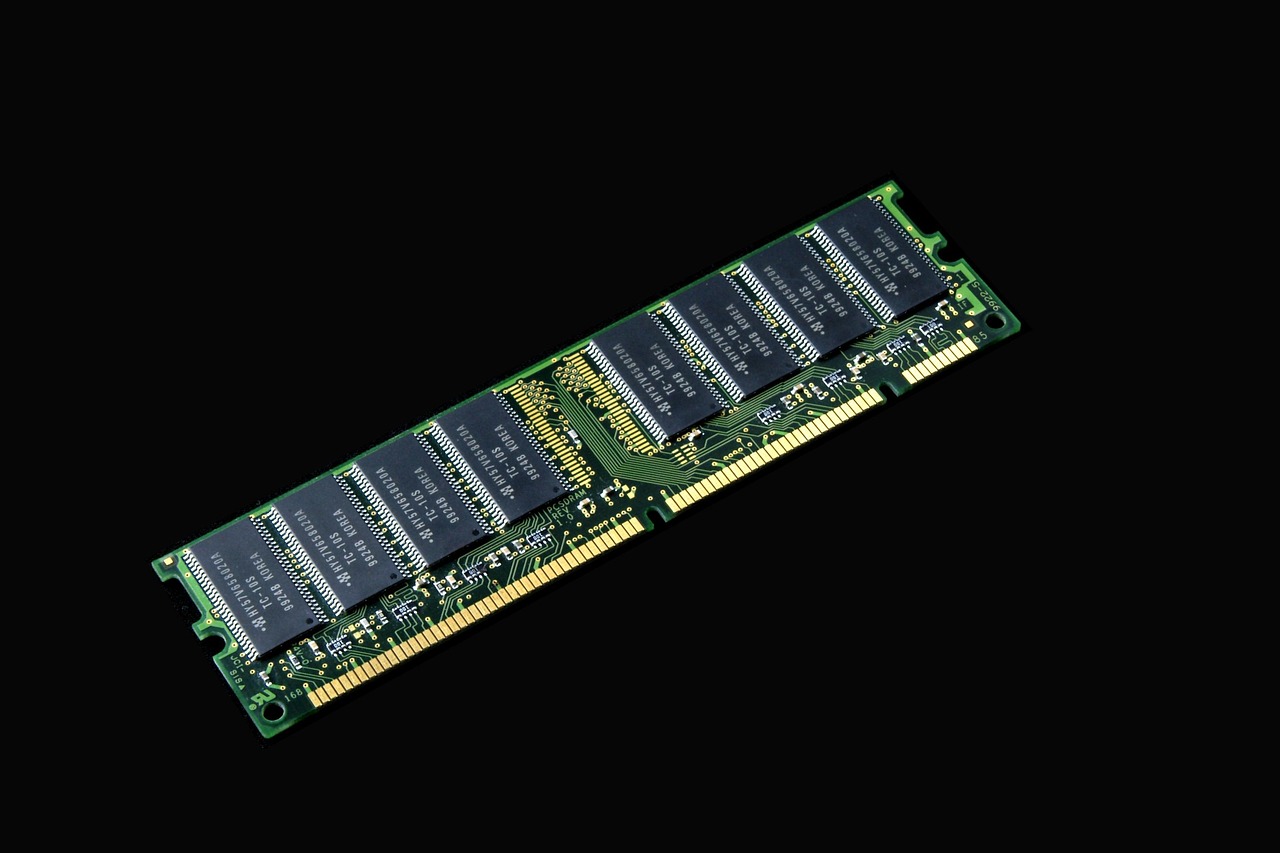
Microchip Technology's reported lead times of up to 32 weeks have set off alarm about AI buyers crowding out everyone else. Analysts say the stronger price pressure on phones and laptops comes from a separate squeeze in memory chips, while car makers report rising costs but no clear sticker-price jump yet.
Phones and laptops are already getting more expensive on average, and the main cause is the price of memory chips, not the 32-week lead times that dominated headlines this month. Cars face rising costs, but the evidence so far does not show a clear jump in what buyers pay. Both squeezes trace back to AI, which is drawing factory capacity and engineering attention toward data-center products.
The 32-week number comes from a single company. On its fiscal second-quarter earnings call on November 5, 2026, Microchip Technology's chief executive, Steve Sanghi, said standard products that once shipped in four to eight weeks now take six to 32 weeks, according to a report syndicated by Yahoo Finance. The figure is the top of a range for one supplier, not an industry average, and it describes a different bottleneck from the one pushing up consumer-device prices.
What Microchip actually said, and how far it travels
Microchip said it could have shipped more product had AI customers not filled its suppliers' factories. Sanghi said AI companies "came in and took over the whole factory," as quoted in the Yahoo Finance report. The company's stock fell about 10% after the call, and the same report says orders placed inside the new lead times often go unfilled, pushing revenue into later quarters while backlog grows and orders keep outpacing shipments.
According to reports on the call, the constraint sits in packaging and testing lines at outside assembly and test houses, where data-center buyers have taken capacity. Some substrates are unavailable, and capacity for older-generation chips is tight. Microchip mainly sells microcontrollers and similar parts, which go into cars and industrial equipment rather than into the memory modules at the center of the phone and laptop story.
The company was not alone in seeing long waits. Accuris, a component-data firm, reported that lead times for the longest-waiting semiconductors reached about 40 weeks in March 2026, against 20 to 25 weeks through most of 2025. Accuris suggested tariff-related front-loading of orders was likely behind the jump, which is an inference rather than a measured cause.
Caution is warranted about the source. An executive explaining a 10% stock drop has reason to describe the problem as industry-wide, and the transcript itself has not been reviewed for this article. The Accuris data point the same direction, which lends the claim some support, but it remains one supplier's account of its own products.
The bigger price driver: memory
The strongest evidence for higher consumer prices is in DRAM and NAND flash, the memory that sits in nearly every phone and laptop. Suppliers have shifted capacity toward high-bandwidth memory for AI servers, and prices for the conventional memory used in consumer devices have surged. IDC's Nabila Popal said memory costs are up nearly 300% from a year ago and make up more than 65% of the bill of materials at the low end of the phone market.
The turn came quickly. A CSIS analysis notes that as recently as early 2024, memory makers were sitting on excess inventory, with DRAM suppliers holding roughly 31 weeks of it and prices collapsing. The current squeeze therefore reflects a sharp reversal in a historically cyclical business, not a long-standing scarcity.
What forecasters expect for the fourth quarter
TrendForce, a market-research firm, published its fourth-quarter outlook on September 30, 2026. It projects conventional DRAM contract prices rising 10% to 15% from the third quarter and NAND flash 15% to 20%. A separate report on the same forecast puts the DRAM increase at 15% to 20% when high-bandwidth memory is included.
| Category | Forecast change |
|---|---|
| Conventional DRAM | +10% to +15% |
| NAND flash | +15% to +20% |
| DRAM including high-bandwidth memory | +15% to +20% |
TrendForce also expects the pace of increases to moderate, and says suppliers have been filling agreed volumes for PC makers and module makers every quarter this year. In its framing, the problem is price and allocation rather than a complete absence of supply. Mobile DRAM allocations are tight, however, and rising costs are weighing on smartphone production.
Two caveats matter for shoppers. Contract prices are negotiated between suppliers and large customers, while retail prices also reflect inventory, controllers, distribution, competition and promotions, so the two do not move one for one. And a report on TrendForce data from early November says spot trading in DRAM has stalled on weak demand, with some suppliers' increases trailing the market because long-term agreements fix how their prices are set.
Phones: fewer units, higher averages
IDC's most recent forecast, published around late August 2026, projects global smartphone shipments falling 16.7% in 2026 to just over 1 billion units, the steepest annual contraction the industry has recorded. At the same time it expects the average selling price to rise 27.6% to $581, and total market value to grow 6.3% to $613 billion. The sub-$100 phone segment, IDC says, effectively disappears.
The average selling price is not the same as the price of a given phone. It can rise because cheap models vanish from the lineup, even if no individual model becomes more expensive. IDC's figure therefore blends true price increases with a shift in what is sold, and it is a forecast, not a measured retail price.
Counterpoint Research, a rival firm, reached a similar picture in its May 2026 edition, forecasting a 13.9% shipment decline to 1.08 billion units, the lowest since 2013. It expects Apple and Samsung to be the most insulated and Huawei to be the only Chinese brand to grow, with the squeeze lasting through the second half of 2027. An earlier Counterpoint estimate said DRAM price surges had already raised bill-of-materials costs by about 25% for low-end phones, 15% for mid-range models and 10% for high-end ones.
That tiering explains who bears the cost. A fixed amount of memory is a bigger slice of a budget phone than of a flagship, and large vendors can negotiate supply more easily than small ones. ABC News in Australia reports that Microsoft, Google and Apple have raised prices on several phones, computers and tablets in recent months, though the specific models and any US price changes were not verified for this article.
Laptops: costs pass through, unevenly
IDC's PC forecast, from around June 2026, calls for global shipments to fall 11.3% this year, with the fourth quarter down 20% from a year earlier. The firm sees no meaningful relief before the end of 2027. Its December 2025 worst-case scenario had assumed an 8.9% shipment decline and price increases of 6% to 8% in 2026, according to Engadget, so actual shipment losses now look worse than that scenario.
Memory is normally 10% to 18% of a laptop's manufacturing cost and could reach 20% or more, according to a TrendForce-based estimate relayed by Yahoo and Tom's Hardware. That share explains why a steep memory price rise shows up in laptops but, on average, less dramatically than in budget phones, where IDC puts memory at over 65% of the bill of materials.
CSIS reports that PC suppliers are passing higher memory costs along. It cites one unnamed source saying systems with 128 GB of memory rose $575 to $765 and Nvidia-GPU AI laptops with 24 GB rose $530. Those figures cover high-end configurations and rest on a single source, so they should not be read as a typical increase for a mainstream laptop. TrendForce adds that notebook inventories increasingly reflect higher component costs in the fourth quarter, which is weighing on end-market sales.
Cars: cost pressure, not yet a clear price jump
Automakers' October earnings show memory entering the cost picture. Ford chief executive Jim Farley described commodities, memory and logistics as a year-over-year headwind of about $2 billion, according to an NPR report. GM forecast that materials costs, including computer chips and diesel, could cost it up to $2 billion this year, and Stellantis chief executive Antonio Filosa said higher memory-chip and raw-material prices will be an industry-wide phenomenon.
Those dollar figures bundle memory with commodities, logistics and diesel, so memory's own share is unknown. GM's chief financial officer also said inflationary pressures, citing commodities, logistics and DRAM, could create another $2 billion headwind in 2027, according to a report on CNBC coverage. Tariffs are a major confounder as well: GM still paid about $2.5 billion in tariff costs, per the same reporting.
What prices show so far
Cox Automotive data cited by CNBC put the average new-vehicle transaction price in the US above $50,500 in September, just short of the record $50,614 set in December 2025. Prices are high, but they have not clearly broken out because of memory. Reports on carmaker pricing conflict: one outlet, citing Tom's Hardware, said GM and BYD announced significant increases because of the memory shortage, while another said GM expected 2026 average prices to rise only 0.3% and had announced no memory-driven increase on a specific vehicle. Both are secondary sources, and GM's own statement was not found, so the stronger claim stays unconfirmed.
Cushions exist. Memory is a small share of a vehicle that costs about $50,000, and CNBC's reporting says automakers have offset costs through cost cuts and a richer sales mix. Ford's finance chief said the company is not seeing a demand impact on trucks and fleet.
Production risk is a separate question
Auto supplier Visteon's quarterly filing says memory conditions may create cost pressures and could affect industry production volumes, which is cautious, forward-looking language. The same filing shows global light-vehicle production fell about 3% in the first quarter of 2026, citing S&P Global data, but it does not attribute the drop to memory and lists tariffs and a Middle East conflict among other risks. An analyst view published by Motor.com in December 2025 expected automakers to absorb costs and predicted only anecdotal disruption, mostly from panic buying.
Chinese-market anecdotes are more alarming. Gasgoo reports that a Li Auto supply-chain executive warned automotive memory fulfilment could fall below 50% in 2026, and that GAC Honda adjusted production in January. Whether a US or global production halt has actually occurred this year was not established in the research behind this article.
Gartner's Masatsune Yamaji told EE Times that the present shortage is one of commodity memory, whereas the 2021 car-chip crisis began mainly with legacy semiconductors. That difference helps explain why memory is a cost story for automakers first, and Microchip's long lead times, which concern the older-style parts, are the nearer-term production risk.
How long the squeeze may last
IDC sees no meaningful PC relief before the end of 2027. Counterpoint expects phone-market pressure through the second half of 2027, with recovery in late 2027 as added memory capacity comes online. Gasgoo reports that new memory production lines are not expected until 2027 or 2028.
TrendForce says PC makers keep buying aggressively on the expectation that DRAM supply stays tight in 2027. That behavior can itself sustain prices, since buyers who stockpile keep demand high.
Forecasts have also kept worsening. IDC's 2026 phone-price outlook moved from about $465 in December 2025 to $581 by late summer, according to the research reviewed, and Counterpoint's shipment forecast went from a 2.1% decline in December 2025 to 13.9% by May. Any single number should be read as a snapshot of a moving estimate.
What it means, and what to watch
The "AI took over the factories" shorthand captures the mechanism but overstates it. Suppliers did redirect capacity to higher-margin AI products, yet TrendForce says they are still delivering agreed volumes to PC makers. The cost to consumers arrives through prices, thinner specifications and disappearing entry-level models more than through empty shelves.
Several signals will settle the question. Reports say chip stocks fell and the Nasdaq entered correction territory the week of Microchip's call. If AI spending cooled, capacity might loosen, but that is speculation, not a documented trend. Memory cycles have turned abruptly before, as the 2024 inventory glut shows, even though analysts now expect tightness into late 2027.
For shoppers, the practical read is directional: budget devices and smaller brands face the sharpest pressure, Apple and Samsung the least, and cars sit between cost pressure and an uncertain pass-through. The next evidence worth watching is actual retail pricing data, GM's and Ford's own pricing statements, and whether the moderating contract-price increases in TrendForce's outlook hold.
Frequently asked questions
Will laptop prices go up in 2026?
Analysts expect them to, mainly because memory costs are rising. IDC forecast in December 2025 that prices could rise 6% to 8% in a worst-case scenario, and CSIS reports suppliers are passing along higher memory costs. Specific retail increases for typical laptops were not documented in the research reviewed.
Are phone prices going up because of the chip shortage?
On average, yes, according to IDC, which forecasts the 2026 average selling price rising 27.6% to $581. That figure partly reflects cheap models disappearing, and the main cause cited is a memory price surge rather than long chip lead times.
Will car prices rise because of chip lead times?
Not clearly so far. Ford, GM and Stellantis report higher costs that include memory, but the dollar figures also cover commodities, logistics and diesel. Cox Automotive data show the average new-vehicle price just under its December 2025 record.
Is the 32-week lead time an industry-wide figure?
No. It is the top of a six-to-32-week range that Microchip's CEO gave for the company's standard products. Accuris data show other semiconductor lead times reaching about 40 weeks in March 2026, so long waits are not unique to Microchip.
How long will the memory shortage last?
IDC sees no meaningful PC relief before the end of 2027, and Counterpoint expects recovery in late 2027 as capacity comes online. New memory lines are not expected until 2027 or 2028, according to Gasgoo, and all of these are forecasts.
Sources (24)
- The Chip Shortage Is Back, and Microchip Says AI Customers Are Crowding Everyone Out , Yahoo Finance
- Microchip: AI Demand Stretches Chip Lead Times , technology.org (2026-11-09)
- The Slow Burn Becomes a Flash Point , Accuris
- AI Server Demand Sustains Memory Contract Price Increases in 4Q26, While Consumer-Side Pressure Persists, Says TrendForce , TrendForce (2026-09-30)
- DRAM and NAND Contract Prices Forecast to Rise as Much as 20% in Q4 2026 , Guru3D
- DRAM Contract Prices Seen Rising 10% to 15% in Q4 as Spot Market Stalls, TrendForce Says , Capital Times
- Beyond the Memory Cycle: AI, HBM, and the New Semiconductor Shortage , Center for Strategic and International Studies (CSIS)
- Smartphone Shipments Set for Record 16.7% Drop in 2026, as the Memory Crisis Hits Full Force , IDC
- IDC - Smartphone Market Insights , IDC
- 2026 Smartphone Shipments to Post Worst Annual Decline on Record as Memory Crisis and Geopolitical Shocks Converge , Counterpoint Research
- 2026 Smartphone Shipment Forecasts Revised Down as Memory Shortage Drives BoM Costs Up , Counterpoint Research
- How the AI boom is forcing tech prices higher - ABC News , ABC News (Australia) (2026-09-01)
- IDC - PC Market 2026: Memory Shortage Drives 11% Shipment Drop , IDC
- IDC warns of major PC market downturn due to memory crunch , Engadget
- New on Yahoo (memory price hikes and laptop costs) , Yahoo Tech
- Tariffs, diesel and computer chips are driving up costs for automakers , KUNC (NPR) (2026-10-29)
- Where's the growth? Legacy automakers face a tougher 2027 as costs rise, market tightens , CNBC (2026-11-06)
- Automotive Industry Faces Price Increases as AI-Driven Memory Chip Shortage Impacts Vehicle Costs , Breitbart (2026-07-24)
- A new car will carry 278 gigabytes of memory by the end of this year (memory chip shortage and the auto industry) , Autonocion
- VISTEON CORP - Form 10-Q - FY2026 , U.S. Securities and Exchange Commission
- DRAM Makers Focus on AI Data Centers, Fuel Auto Chip Shortage , Motor.com (2025-12-01)
- Is the Auto Chip Shortage Coming Again? - Gasgoo , Gasgoo
- Automakers Face Memory Crunch as AI Strains Chip Supply , EE Times
- Microchip: 3 Key Takeaways for Long-Term Investors , The Motley Fool (2026-11-09)
This article was drafted with the help of AI and reviewed by Jaroha editors before publication.