
October CPI Preview: The 3.9% Inflation Figure Is an Estimate, Not a BLS Number
BLS will not publish an annual rate for October, so the budget picture and the Fed's December decision rest on September data and forecasts.
The widely quoted 3.9% inflation rate for October is a private estimate, because BLS says it cannot compute an annual rate after the 2025 shutdown. The latest official reading, 3.7% in September, was driven by gasoline, while groceries and rent have risen far more slowly. The report is the last inflation reading before the Fed's December 8-9 meeting.
The October consumer price index, scheduled for release by the Bureau of Labor Statistics at 8:30 a.m. ET on November 10, will not contain the 3.9% annual inflation rate that many previews have attached to it. According to a report from Bloomingbit, BLS said on November 9 that the release would omit year-over-year headline and core rates. Reuters, in a story carried by AOL, likewise reports there is no comparison base, because October 2025 prices were never collected during last year's government shutdown.
The 3.9% figure is therefore one economist estimate inside a range of roughly 3.7% to 4.0%. That matters for households and for the Federal Reserve alike. The most recent official annual rate, 3.7% for September, was pushed up mainly by gasoline, while grocery and rent inflation run well below it. The October report is also the last inflation reading before the Fed meets on December 8-9.
Where the 3.9% comes from, and why it is soft
An annual inflation rate compares today's price level with the level 12 months earlier. With no October 2025 survey, BLS has no official base for that comparison, and investingLive notes that the agency never published an October 2025 CPI report. Forecasters have had to impute last October's price level themselves, which is why their estimates differ.
FactSet's median points to about 4% for the year ending October, up from 3.7% in September, and about 2.8% for core inflation, which excludes food and energy. The aggregator Nowflation lists consensus at 3.9% and its own forecast at 3.8%. The Cleveland Fed's nowcast pointed to 3.7% for the headline rate and 2.5% for core.
These numbers are not independent confirmations of one another. Several are built the same way: the September index level, plus an expected monthly change, measured against an estimated base. A spread of 0.2 percentage points is probably within the uncertainty of that imputation.
A rising annual rate is not accelerating prices
The monthly forecasts tell a different story from the annual estimates. Morningstar reports consensus for October headline CPI of 0.3% (Dow Jones and Bloomberg) or 0.24% (FactSet), with core at 0.2%. That follows September gains of 0.6% for the headline and 0.3% for core, according to BLS.
The annual rate can therefore tick up to 3.9% or so while prices climb more slowly than in the previous month. The reason lies in the estimated base, not in a fresh burst of price increases. Previews broadly agree that gasoline, which drove September, stopped surging.
The September baseline: energy up sharply, the rest milder
BLS's September report, released October 14, showed the consumer price index for all urban consumers up 0.6% on a seasonally adjusted basis and 3.7% over 12 months. Core rose 0.3% on the month and 2.6% over the year. The 12-month rate was 3.4% in August, according to TD Economics, and 3.7% was above the 3.6% consensus, per Nowflation.
Gasoline accounted for more than half of the monthly increase, according to the BLS release. Gasoline rose 9.1% in September and is up 34.2% from a year earlier. Energy as a whole is up 20.4% over 12 months, with fuel oil up 74.2%, electricity 4.4% and piped natural gas 5.0%.
| Category | 12-month change (%) | 1-month change, seasonally adjusted (%) |
|---|---|---|
| All items | 3.7 | 0.6 |
| Core (excluding food and energy) | 2.6 | 0.3 |
| Food | 2.5 | 0.0 |
| Food at home | 1.8 | -0.1 |
| Food away from home | 3.5 | 0.2 |
| Energy | 20.4 | 5.2 (per TD Economics) |
| Gasoline | 34.2 | 9.1 |
| Shelter | 3.2 | 0.4 |
| Rent of primary residence | 2.8 | 0.2 (per Piedmont Crescent Capital) |
| Owners' equivalent rent | 3.3 | 0.3 (per Piedmont Crescent Capital) |
Sources: BLS release of October 14, 2026, and BLS 12-month category charts, with the monthly energy, rent and owners' equivalent rent figures from the secondary sources named in the table. The 12-month figures are not seasonally adjusted.
What the numbers mean for three budget lines
CPI measures the price change of a broad basket for urban consumers, not the experience of any one household. A family that drives long distances and rents will feel a different mix than one that owns its home and commutes by train. The categories below are the ones that most often decide whether a budget feels tight, and each is moving at its own pace.
Groceries: the mildest of the three, with a forecast risk
Food at home fell 0.1% in September and is up 1.8% over the year, according to BLS data reproduced by Fox Business. That is well below the 3.7% headline. Food overall was unchanged on the month and is up 2.5% on the year, because eating out is rising faster: food away from home is up 3.5%, with full-service meals up 3.8% and limited-service meals up 3.2%, per BLS.
Fox Business also reports that meats, poultry and fish fell 0.4% in September and are up 2.2% over the year, with beef and veal up 3.5%. Eggs are down 20.6% from a year earlier as supply recovers after the avian flu outbreak. Those sub-item figures come from a single news source and should be checked against BLS detailed tables.
The risk lies ahead rather than in the data. Kiplinger, citing Wells Fargo analysts, reports an expectation that food inflation will pick up as higher commodity and transportation costs gradually reach the grocery store. Reuters, via AOL, likewise expects food prices to have risen in October after being flat in September. Both are forecasts, and the pass-through is not yet visible in the official numbers.
Gasoline: the biggest swing, now easing at the pump
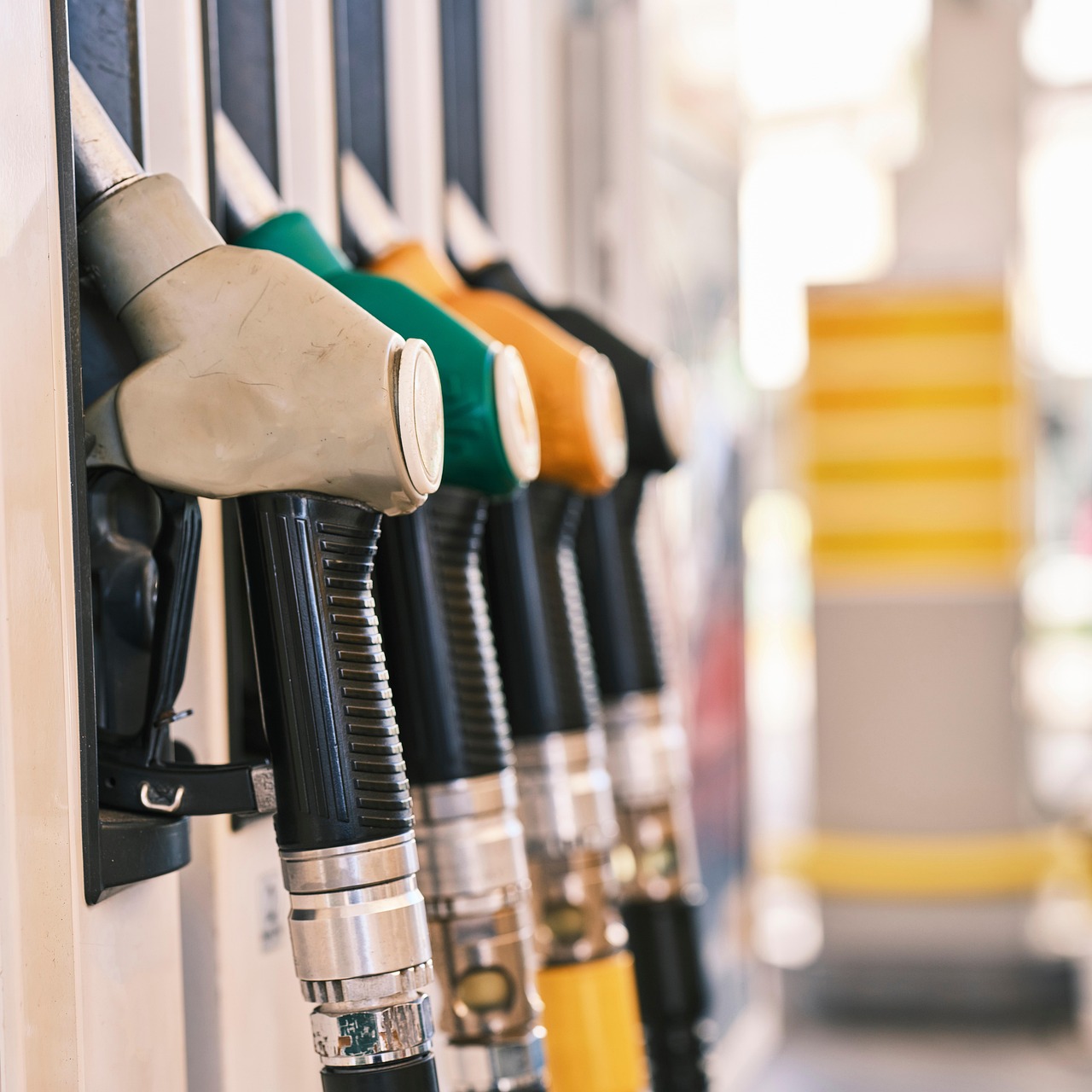
Gasoline is the clearest source of budget pressure in the September data, but retail prices began to retreat in October. MLQ.ai, summarizing weekly Energy Information Administration data, says regular gasoline averaged $4.31 a gallon in October, down from $4.36 in September. NBC News reports that AAA's national average fell from $4.41 on October 1 to $4.18 at the end of the month, a drop of more than 5%, and to about $4 on November 9.
The sources do not agree exactly on early-November levels: TipRanks put retail gasoline at $4.15. The gap probably reflects different dates and different surveys, AAA versus EIA, rather than a real contradiction. Either way, pump prices remain far above where they stood a year ago, given the 34.2% annual increase through September.
The CPI gasoline line can behave differently from the pump. Reuters, via AOL, reports that unadjusted EIA data showed gasoline down 0.9% from September, yet economists expected a small increase in CPI gasoline after seasonal adjustment. A household watching pump prices fall could see a monthly CPI gasoline reading that rises.
Rent and shelter: a slow-moving giant
Shelter is the largest part of the basket. Stocktitan, a commentary site, puts its weight at 35.3% against 3.8% for gasoline, using July 2026 weights; those figures come from one secondary source and should be checked against BLS relative-importance tables. If they hold, a modest move in shelter can matter as much to the headline as a large move in gasoline.
BLS data show shelter rose 0.4% in September after 0.3% in August, and its 12-month rate was 3.2%, up from 3.0% in August, according to the US Inflation Calculator site. Over 12 months, rent of primary residence is up 2.8% and owners' equivalent rent 3.3%, per BLS. Piedmont Crescent Capital notes that lodging away from home jumped 2.0% in September, so part of the monthly shelter rise came from hotels rather than leases.
One caution applies to every renter. CPI rent averages price changes across all tenants, including those in existing leases, so it does not measure what a newly signed lease costs. This research did not retrieve new-lease rent indices, so the CPI figure cannot say whether someone searching for an apartment now faces a better or worse market. Citigroup economists, quoted by NBC News, see shelter and services inflation possibly slowing in October.
Wages, weights and what a budget actually absorbs
Whether 3.7% to 3.9% inflation squeezes a household depends on pay. CNBC reports that payrolls rose 165,000 in October and unemployment edged down to 4.1%, but that inflation-adjusted wage growth has been negative. That claim rests on one news source here and needs support from the BLS real earnings release, which was due the same day.
The mix of categories also shapes the effect. Gasoline has risen the most but is a small share of the basket, groceries are rising slowly, and shelter is moving at roughly 3% on a large base. A household that spends heavily on fuel has felt much more than 3.7%, while one that spends mostly on rent and food at home has felt less. The research did not include BLS Consumer Expenditure Survey spending shares, so converting these percentages into dollars per household would require data not gathered here.
Expectations are a further factor. Trading Economics lists consumer inflation expectations of 3.9% for the one-year horizon in October, 3.3% at three years and 3.0% at five years, without naming the survey. Because the survey is unidentified, that 3.9% should not be confused with the CPI estimate of the same size.
How the report feeds the Fed's December decision
The Fed has already moved once this fall. According to CNBC, it held rates on October 28 after its first hike since 2023, leaving the target range at 3.75%-4%. Advisor Perspectives reports the hold came on a 10-2 vote, with Governor Lisa Cook and Cleveland Fed President Beth Hammack dissenting in favor of another quarter-point increase. BYDFi, a lower-quality source, reports that the September 16 vote to hike was unanimous at 12-0.
CNBC quotes the October statement as saying "Inflation remains elevated" while signaling that officials would wait for an accumulation of more information, and it describes activity as "expanding at a strong pace." The Fed is led by Chair Kevin Warsh. A December 9 hike would lift the range to 4.00%-4.25%. Year-end projections in the September dot plot ranged from 4.1% to 4.4%, per Advisor Perspectives, which would imply one to two more hikes if read literally; the projections table itself was not retrieved.
What markets and analysts expect
Fox Business reported the CME FedWatch probability of a December quarter-point hike at 82.6% after the October meeting, up from 78.3% a day earlier. TipRanks, after the jobs report, said the odds had passed 65%. The figures differ, perhaps because of different dates or tools, so both should be treated as unverified and as likely to move after today's CPI.
Analysts quoted by CNBC see a high bar for a surprise. In their words: "Absent an indisputably soft 0.1% [month-over-month] print, we doubt the inflation data will dissuade the Fed from hiking in December." The analyst is not named in the retrieved text. Kiplinger reports that Wells Fargo expects one more hike in December.
The disagreement behind the odds
The central dispute is whether the Fed is facing a temporary energy shock or broader momentum. Core inflation is 2.6%, well under the 3.7% headline, which supports the energy reading. Against that, CNBC reports that Chicago Fed President Austan Goolsbee said the current run of inflation defies what supply shocks and tariffs would normally produce, with the AI build-out intensifying it. Core also printed 0.3% in September against a 0.2% consensus, and one forecaster quoted by Yahoo Finance sees risks to core skewed to the upside.
A counter-view exists as well. JPMorgan Asset Management's summary of the October meeting says evidence that tighter policy is working through financial and credit markets "has reduced the urgency" for further restraint. That is a paraphrase of the Fed chair's remarks and should be checked against the transcript. The research did not find a primary Fed document laying out the majority's reasoning.
Timing adds to the uncertainty. BLS lists the November CPI for December 10, a day after the Fed meeting ends, so October's report is the last inflation reading policymakers will have. Because the annual rate is imputed, the monthly core figure is likely to carry more weight than the 3.7%-to-4% headline estimates.
What to watch after the print
The 3.9% label will likely fade once the real data arrive, but the budget questions behind it will not. The official evidence shows an inflation spurt led by fuel, a grocery bill rising more slowly than the headline, and a rent measure that moves gently but covers the largest share of spending. Pump prices falling in October and early November suggest the energy contribution may fade, and Morningstar notes analysts expect inflation to keep falling in 2027.
Three readings will do most of the work: core CPI against the 0.2% consensus, the shelter line after September's 0.4%, and whether food at home shows the pass-through that analysts predict. If core comes in soft, the December hike case weakens; if it surprises upward, the Fed's two dissenters will look less isolated. Either way, the missing October 2025 data means annual comparisons will carry an asterisk for some time.
Frequently asked questions
Is 3.9% the official October inflation rate?
No. BLS said it would not publish year-over-year headline or core rates for October, because October 2025 prices were not collected during the shutdown. The 3.9% is a private estimate, and others range from 3.7% (Cleveland Fed nowcast) to about 4% (FactSet).
What was the last official inflation rate?
BLS reported 3.7% for September 2026, up from 3.4% in August. Core inflation, which excludes food and energy, was 2.6%. Gasoline, up 34.2% over the year, was the main driver.
Why can CPI gasoline rise when pump prices fall?
CPI uses seasonally adjusted figures, and pump prices before adjustment can fall while the adjusted reading rises. Reuters reported unadjusted EIA data showing gasoline down 0.9% in October, yet economists expected a small adjusted increase.
Does CPI rent show what new renters pay?
Not directly. CPI rent averages price changes across all tenants, including those in existing leases. Over 12 months through September, rent of primary residence was up 2.8% and owners' equivalent rent 3.3%, but this research did not examine new-lease rent indices.
Will the Fed raise rates in December?
That is not settled. The Fed held at 3.75%-4% on October 28 on a 10-2 vote, and market odds of a December hike were reported at 65% or more to 82.6% depending on the source and date. Analysts quoted by CNBC say only an unusually soft October report would likely change that.
Sources (28)
- CPI Home , U.S. Bureau of Labor Statistics
- Consumer Price Index News Release - 2026 M09 Results (archived release) , U.S. Bureau of Labor Statistics (2026-10-14)
- Consumer Price Index News Release - 2026 M09 Results , U.S. Bureau of Labor Statistics (2026-10-14)
- Consumer Price Index (CPI) News Release , U.S. Bureau of Labor Statistics (2026-10-14)
- 12-month percentage change, Consumer Price Index, selected categories , U.S. Bureau of Labor Statistics (2026-10-01)
- Schedule of Selected Releases 2026 , U.S. Bureau of Labor Statistics (2026-11-03)
- A key report for where inflation stood in October comes out Tuesday. Here's what to expect , CNBC (2026-11-09)
- Fed interest rate decision October 2026: Fed holds rates steady , CNBC (2026-10-28)
- US consumer prices expected to have risen at slower pace in October , Reuters via AOL (2026-11-10)
- October CPI report: Inflation likely slowed , NBC News (2026-11-10)
- September CPI: Inflation trended higher as energy prices hit consumers , Fox Business (2026-10-14)
- October FOMC: Federal Reserves holds rates steady ahead of election , Fox Business (2026-10-28)
- October CPI Forecasts Show Inflation Softening, but December Rate Hike Still Looks Likely , Morningstar
- October CPI Report: What the Inflation Data Is Expected to Show , Kiplinger
- October inflation data is expected to be cooler, helped by steadying energy prices , Yahoo Finance
- TD Economics - U.S. Consumer Price Index (September 2026) , TD Bank
- FOMC Statement: October 2026 , JPMorgan Asset Management (2026-10-28)
- Fed's Interest Rate Decision: October 28, 2026 , Advisor Perspectives (2026-10-28)
- US CPI preview: 43-day shutdown leaves no official annual rate as monthly pace seen easing , investingLive (2026-11-10)
- US October CPI Report to Omit Annual Inflation Rates After Shutdown Hit 2025 Data , Bloomingbit (2026-11-09)
- U.S. Markets Brace for October CPI Report After Hot Jobs Data Pushes December Rate Hike Odds past 65% , TipRanks
- October CPI preview: economists expect inflation to cool as gasoline eases, with no official annual rate , MLQ.ai (2026-11-10)
- CPI Release Dates 2026: Next Report Nov 10, 8:30 AM ET , Nowflation
- United States Inflation Rate , Trading Economics
- US CPI Sept 2026: Inflation Hits 3.7% as Gas Prices Surge , US Inflation Calculator (2026-10-14)
- September CPI 2026: Gasoline moves the headline, services move the trend , Piedmont Crescent Capital
- September CPI Report: Gas Prices and the 3.4% Inflation Rate , Stocktitan
- FOMC October 2026 Results: Fed Holds Rates, Dissents Emerge , BYDFi