
A hijacked Optimizely script put card skimmers on trusted sites. How to shop safely
Attackers altered a vendor's code instead of breaching 178 organizations, so a familiar address and a padlock proved nothing about the checkout page.
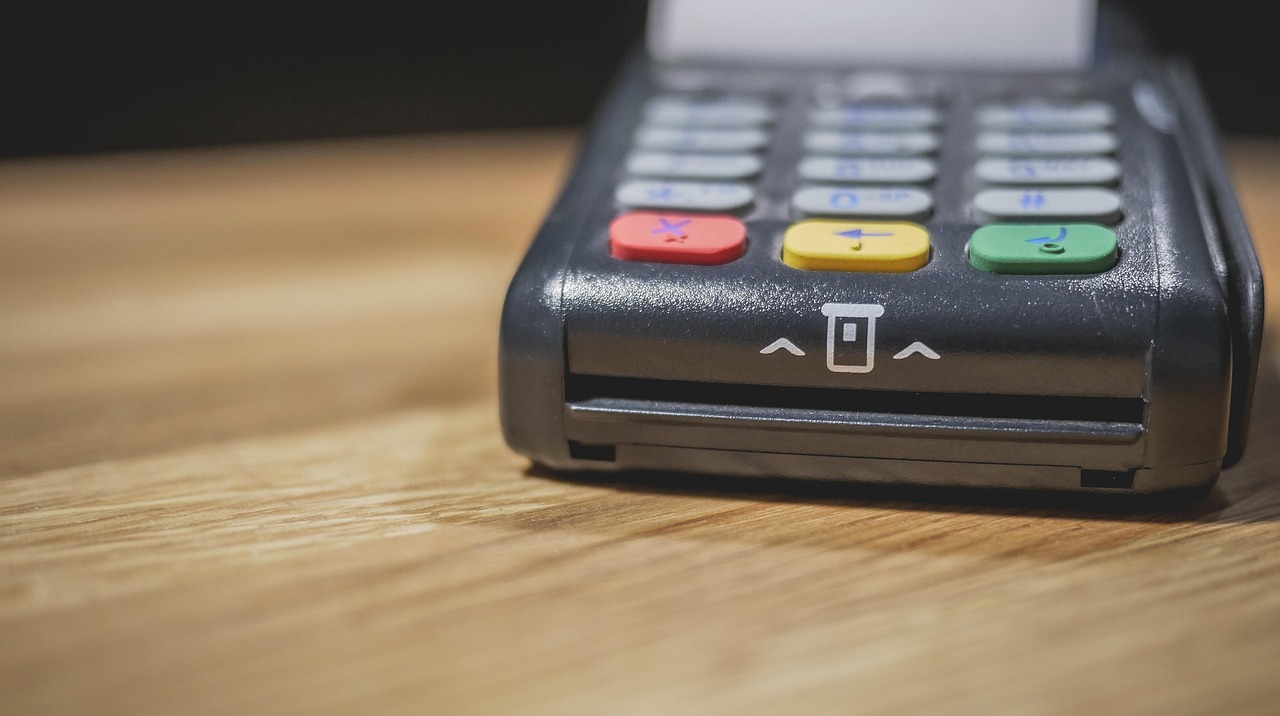
On Nov. 16, 2026, attackers used a flaw at Optimizely to add malicious JavaScript, including a card skimmer, to projects tied to 178 organizations. Shoppers cannot spot this kind of attack by eye, so the best-supported advice centers on limiting financial damage. The number of stolen cards is still unknown.
Attackers did not have to break into a single retailer's servers to put a card skimmer on well-known websites on Nov. 16, 2026. They altered code at Optimizely, a vendor whose scripts many organizations load into their own pages, and every site that pulled the tainted file ran it. According to Report URI researcher Scott Helme, 188 of the 1,611 distinct Optimizely snippets he checked were infected, and those snippets belonged to 178 organizations.
The timing matters because holiday shopping is under way, and because the attack removes the usual visual cues. The web address, the padlock and the security certificate were all legitimate. For that reason, the most dependable shopper defense in the evidence gathered so far is not spotting the attack but limiting what a stolen card number can cost, and that depends heavily on which card is used and how fast a problem is reported.
What happened in the Optimizely incident
Scale and the organizations named
Helme's write-up on the Report URI blog says the true count is probably higher than 178, because only the snippets his team could locate in time were examined. Help Net Security reported that the organizations named included Zoom, the BBC, CNN, Salesforce, GitLab, IKEA, HSBC, Equifax, Air France-KLM, Ledger and Peacock. Banks and other financial firms formed the largest group at 32 organizations, followed by technology companies and retailers.
The list needs a caution. Many of those names are not retailers, and the sources do not establish whether each one even had a card-entry form. Reflectiz, a security vendor, stressed that none of the affected organizations had its own servers breached; the vendor's script was what changed. So "trusted websites turned into skimmers" is loosely accurate, but the weak point was a supplier rather than the sites themselves.
How the code got in
Optimizely said an unauthorized party exploited a vulnerability in its Experimentation product and used it to add malicious JavaScript to some customer projects, according to Security Affairs. A spokesperson reportedly told Gizmodo that the flaw sat in the account signup flow, but that detail reaches readers through StepSecurity's account and has no second source. The company says it has fixed the flaw, removed the code and added protections. Optimizely's own status page was not reviewed for this article.
Cybersecuritynews and Security Affairs describe the malicious code as planted in a "Project JavaScript" field inside customer projects. The file was still delivered from Optimizely's own domain with Optimizely's certificate, so browsers and security tools saw nothing unusual. Sites that served the snippet from their own domains were affected too, because the code had been added to the same Optimizely project they pulled from.
What the skimmer took, and what it could not reach
StepSecurity's analysis says the skimmer targeted card numbers, expiry dates and CVV codes typed into a site's own payment forms. It did not collect the cardholder name or billing address, and it could not read card fields inside a cross-origin payment iframe, the kind of card-entry box a processor such as Stripe or Adyen serves inside a merchant's page. Cybersecuritynews and The Register report the same limit, and SOCRadar states it as well. Because the outlets largely repeat one technical analysis, this is effectively a single technical source, and ServNet cautions that each site's architecture should be assessed individually.
The same code did more than skim cards. According to Cybersecuritynews, it swapped cryptocurrency wallet addresses, captured cookies and screenshots, and pushed two exploit kits, Coruna and DarkSword, to iPhone and iPad users. That reach is why the incident is described as a broad compromise of visitors rather than only a payment-card problem.
Timeline and confirmed harm
ThreatDefence, a security vendor, recorded the first infected snippet at 04:21 UTC on Nov. 16 and the card skimmer being added at 13:43 UTC. By 21:52 UTC that Monday, The Register reported, TalkTalk was the only organization on Report URI's list still serving the malware. SOCRadar describes nearly 19 hours of exposure overall. How long the skimmer itself ran on each individual site has not been published.
The only confirmed financial loss is small and involves cryptocurrency. Helme traced roughly $7,000 in cryptocurrency to the attackers' wallets on Monday, The Register reported, while noting that there is no telling how much more the criminals stand to make from stolen payment card details. No source gathered for this article confirms how many cards were captured.
Why a trusted address proves so little
A modern checkout page is assembled from many parts. Analytics, testing tools, tag managers and chat widgets are often loaded from outside vendors and run with the same privileges as the merchant's own code. According to vendor explainers such as PageCrawl's, an attacker who compromises a widely embedded script can modify the file at its source, and every site that loads it inherits the skimmer.
The same explainer points out a second problem for defenders: the malicious code executes in the shopper's browser, so server-side tools such as file-integrity scanners, web application firewalls and server logs are looking in the wrong place. A site can pass every server check and still deliver a skimmer to its visitors.
Not a one-off
Recorded Future's report on the first half of 2026 says Magecart activity placed greater emphasis on abusing trusted third-party services, both to deliver skimming payloads and to send stolen data out, than activity in either half of 2025. The finding reflects the firm's reading of public reporting rather than a systematic count, and Recorded Future sells threat intelligence, so it is best read as a credible trend signal rather than a measurement.
IT Brief's summary of that report lists examples: a campaign that used Google Tag Manager to load skimming code, one that fetched payloads from Stripe customer metadata and sent stolen card data out through Stripe's APIs, and another that displayed a counterfeit "Secure Checkout" overlay. Those cases are a reminder that even hosted payment services are not a guarantee in every scenario.
A smaller, earlier case follows the same pattern. Sansec, as relayed by a secondary blog (its original report was not reviewed), says that from Oct. 24, 2026 a Brazilian Magecart group sent shoppers' card details from Convertr checkouts to its own server by altering a single analytics file. The file's web address did not change, so a simple list of approved domains would not have flagged it. The script was removed on Oct. 27, though the entry point has not been confirmed.
What merchants must do, and where the rules fall short
Defenses mostly belong to the sites. Report URI's crawl, as summarized by OT Ecosystem, found that many of the affected hosts had no Content Security Policy, the browser rule set that limits which scripts may run and where data may be sent, or had one that still allowed the attack. The published counts do not add up to the 256 hosts tested, so exact shares are not given here. BankInfoSecurity reported one telling case at HSBC: the browser blocked the external malicious script, but an embedded fallback still ran because the policy permitted JavaScript's eval function.
What PCI DSS asks for
Per vendor summaries from Vigilbase and CentralCSP (the original standard text was not reviewed), two payment-card industry requirements have applied since March 31, 2025. Requirement 6.4.3 calls for every script on a payment page to be confirmed as authorized, protected by an integrity check and inventoried with a written justification. Requirement 11.6.1 calls for a mechanism that alerts on unauthorized changes to scripts, headers and content as the browser receives them, evaluated at least every seven days. Both sources sell compliance tools.
A loophole and a limit
According to a guide from NHIMG, the PCI Security Standards Council removed those requirements, along with 12.3.1, from the self-assessment questionnaire used by merchants that outsource card entry (SAQ A) on Jan. 30, 2025, effective March 31, 2025. In their place it added an eligibility criterion: the merchant must confirm its site is not susceptible to attacks from scripts. That shifts the burden to self-attestation, and a compliance document cannot prove a page is clean.
Jscrambler, which sells anti-skimming products, notes that the rules aim at detection and do not govern what an approved script does once it runs. Vigilbase adds, as a single-sourced claim, that embedding a processor's iframe does not take the surrounding page out of scope. Taken together, the rules raise the baseline, but passing an assessment is not the same as being safe.
What shoppers can actually do
The evidence here is lopsided. Nearly all of it describes what merchants should do. No study located for this article shows that shopper behavior, such as browser add-ons or a cleaner device, prevents script supply-chain skimming. Advice for shoppers therefore falls into two groups: reducing exposure, which is only partly evidenced, and limiting damage, which rests on well-established consumer law.
Reducing exposure
The Optimizely skimmer could not read card fields inside a processor-hosted iframe, so a card typed into such a box was out of its reach. That supports a modest conclusion: payment boxes served by a processor help against this class of attack. The 2026 Magecart cases involving counterfeit checkout overlays and abuse of Stripe's own APIs show the protection is not universal, and the brief found no guidance on how a shopper can tell which kind of form a page uses.
Digital wallets, virtual card numbers and browser tools are often suggested as safeguards. The research gathered for this article contained no evidence on them, so no claim is made about how well they work. Issuer or card-network documentation on tokenization would be the place to look.
Limiting the damage
Because a skimmed number can be used within hours, the practical levers are the card type and the speed of detection. The Federal Trade Commission says federal law limits liability for unauthorized charges, but the protection depends on the type of card and when the loss is reported. Reading statements promptly and reporting anything unfamiliar to the issuer starts the clocks described below.
Credit versus debit: what the law says
For credit cards, the FTC says liability for unauthorized use under the Fair Credit Billing Act tops out at $50. The FTC's guidance also says a cardholder is not liable at all when only the account number is stolen. FedLaws, a secondary explainer, adds a practical difference: with credit, a disputed charge is money not yet paid, while with debit the money has already left the account. The same source says major card networks and issuers often waive even the $50, though no issuer policy was reviewed.
Debit is more time-sensitive. The Connecticut Attorney General's office summarizes the rules for a lost or stolen card: after more than two business days, liability can reach the lesser of $500 or the losses between the two-day mark and the report. If unauthorized activity is not reported within 60 days of the statement, liability becomes unlimited, and the account holder could lose all the money in the account.
Skimming steals a number, not a card, and that distinction matters. A reproduction of FTC guidance published by the U.S. Navy says that when a debit card number is used without authorization and the card itself was not lost or stolen, the holder is not liable if the problem is reported within 60 days of the statement date. Several secondary legal sites show only the $50, $500 and unlimited tiers. The text of Regulation E, the rule governing debit, was not retrieved, so the exact treatment of stolen debit numbers is stated here with moderate confidence. FindLaw also notes that institutions may set voluntary caps lower than the legal limits.
| Scenario | Credit card | Debit card |
|---|---|---|
| Unauthorized use of the account | $50 maximum (FTC) | Depends on speed of reporting |
| Lost or stolen card, reported after more than 2 business days | $50 maximum (FTC) | Up to the lesser of $500 or losses after the two-day mark (Connecticut AG) |
| Number stolen, card still in the holder's hands | Not liable if only the number is stolen (FTC) | Not liable if reported within 60 days of the statement (FTC text, via U.S. Navy) |
| Unauthorized activity not reported within 60 days of the statement | Not addressed in the sources used here | Potentially unlimited (Connecticut AG) |
What the evidence does not show yet
What this means for the holiday season
The Optimizely episode shows that a familiar brand, a valid certificate and an unchanged web address say little about every line of code on a checkout page. The compromise was documented by one primary researcher, confirmed by the vendor, and echoed by 2026 trends in other campaigns. What it cannot yet show is the cost to ordinary shoppers.
Several things will settle the open questions: any incident report from Optimizely, notices from affected organizations, and fraud alerts from card issuers. Until then, the claims that hold up are the plain ones. Card type and reporting speed shape how much a skimmed number can cost, and the responsibility for keeping checkout pages clean still sits mostly with merchants and their vendors.
Frequently asked questions
Can a well-known website be a card skimmer without being hacked?
Yes, in a limited sense. In the Optimizely incident, the organizations' own servers were not breached, according to Reflectiz. Attackers altered a script served by a vendor, and the sites that loaded it ran the malicious code in visitors' browsers.
Could the Optimizely skimmer read cards entered in Stripe or Adyen boxes?
According to StepSecurity's analysis, no. The code could not read card fields inside a cross-origin payment iframe, and Cybersecuritynews, The Register and SOCRadar report the same. This applies to this payload only, and other 2026 campaigns used fake overlays and abused Stripe's own APIs.
Is a credit card safer than a debit card for online shopping?
For fraud losses, the federal rules summarized by the FTC and the Connecticut Attorney General favor credit. Credit liability for unauthorized use tops out at $50, while debit liability depends on how quickly the problem is reported and can become unlimited after 60 days. With credit, the disputed money has also not yet left the shopper's account.
How long is there to report an unauthorized charge?
The sources point to a 60-day window measured from the statement date for debit card problems, with faster reporting limiting exposure further when a card is lost or stolen. Individual issuers may set their own, more generous terms, so the card agreement and the issuer's fraud line are the places to confirm.
Do shoppers know yet if their cards were taken in the Optimizely incident?
No. No source confirms the number of stolen cards, the specific sites, or whether any retail checkouts were affected. Notices from affected organizations and card issuers would be the first reliable signs.
Sources (26)
- World's Largest Brands Infected With Malware Via Optimizely , Report URI
- OPTIMJACK: Optimizely-Hosted Scripts Loaded a Crypto Clipper and Card Skimmer on 178 Organizations , StepSecurity
- Optimizely hack turns world's biggest websites into malware dispensers , The Register (2026-11-17)
- Malware spread through Optimizely hits 178 organizations, including BBC, CNN and Zoom , Help Net Security (2026-11-17)
- OPTIMJACK: BBC, CNN and Zoom Among Targets of Optimizely Script Hijacking , Security Affairs
- Optimizely Compromise (OPTIMJACK): IOCs, Checks and Hunting , ThreatDefence (2026-11-18)
- Hackers Infect 178 Major Websites via Optimizely to Steal Credit Cards and Target iPhones , Cybersecuritynews
- Optimizely Attack Hits Zoom, BBC, CNN With Skimmer, iOS Kits , SOCRadar
- Optimizely Supply Chain Attack: Lessons From Zoom and CNN , Reflectiz
- Optimizely Flaw Exposes 178 Organizations to Web Skimmers , BankInfoSecurity
- Optimizely Cyberattack 2026: Hackers Infect 178 Major Websites to Steal Payment Data and Target iPhones , OT Ecosystem
- Optimizely Malware Attack 2026: MSP Risk Guide , ServNet UK
- H1 2026 Malware Vulnerability Trends , Recorded Future
- Recorded Future warns of rising Magecart attacks & exploits , IT Brief
- The Convertr Skimmer: How a Hacked Analytics Script Reached Every Checkout , Cybershieldstudio
- What Is Magecart? Client-Side Skimming and How to Detect It , PageCrawl
- PCI DSS 6.4.3 and 11.6.1 Payment Page Scripts Guide , NHIMG
- PCI DSS 6.4.3 and 11.6.1: Payment Page Script Security , Vigilbase
- PCI DSS 6.4.3 & 11.6.1: payment page script inventory , CentralCSP
- Magecart & Formjacking: A PCI DSS v4 Check Before Black Friday , Jscrambler
- Credit and Debt , Federal Trade Commission
- Lost or Stolen Credit, ATM, and Debit Cards , Federal Trade Commission
- CHIPS Articles: Lost or Stolen Credit, ATM, and Debit Cards , U.S. Department of the Navy (DON CIO)
- Lost and Stolen Credit and ATM/Debit Cards , Connecticut Attorney General
- Fair Credit Billing Act: Disputes, Liability, and Remedies , FedLaws
- Are You Liable for Unauthorized Credit Card Charges? , FindLaw