
No Public Accuracy Rate Exists for School AI Gun Detectors
A lawsuit over a Doritos bag at a Baltimore County high school exposes how these systems work, where they fail, and how little independent testing exists.
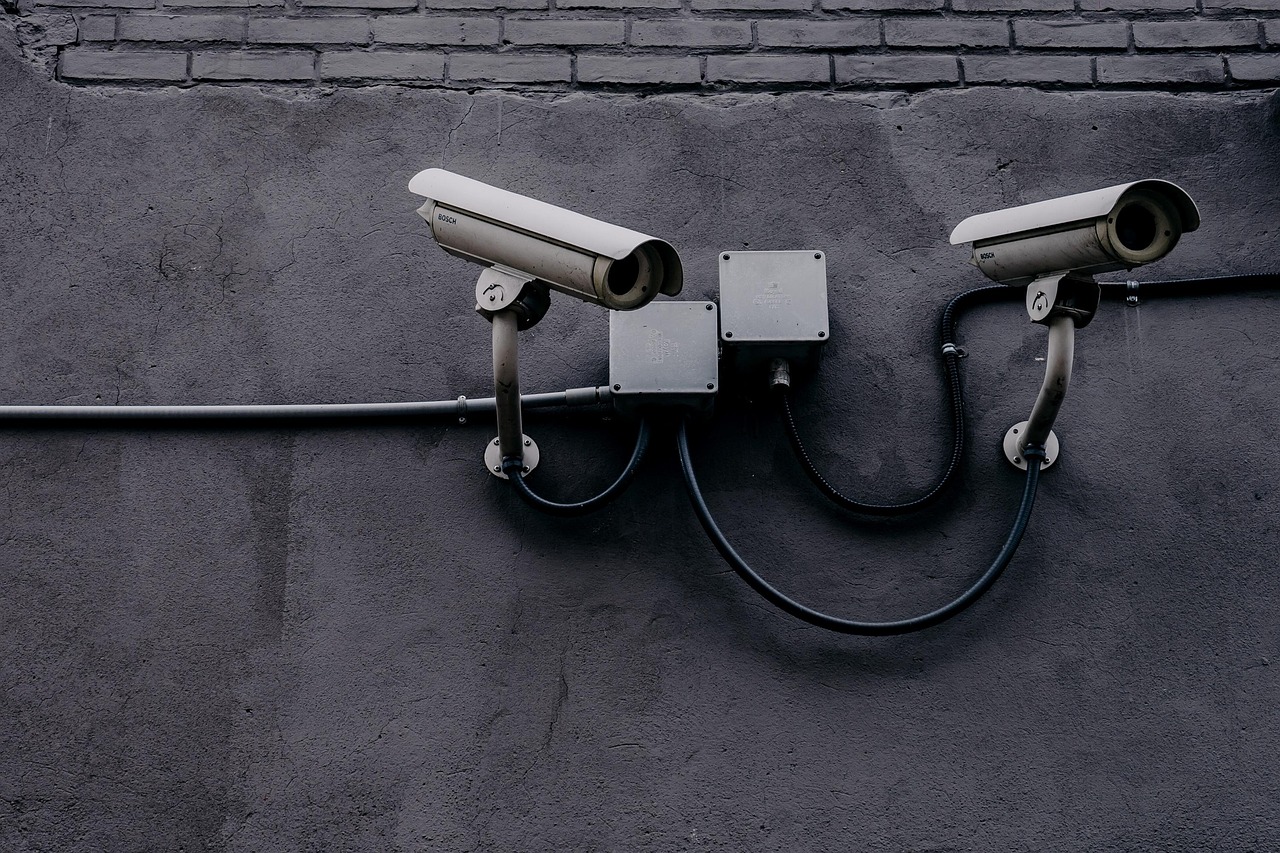
Four students are suing Omnilert, their school district and police after an AI alert led to an armed detention over a bag of chips. The case shows that gun-detection errors involve software, human reviewers and school procedures, and that no independent accuracy figure has been published.
On Oct. 20, 2025, an AI gun-detection system alerted leaders at Kenwood High School in Baltimore County, Maryland, that a student appeared to be holding a gun. According to CBS Baltimore, the object was a bag of Doritos, and body-worn camera footage obtained by the station shows officers approaching and searching the student before realizing it. Four students have now sued the software's maker, Omnilert, along with the school district and county police.
The case raises a question that reaches well beyond one school: how often do these systems get it wrong? The short answer, based on the available reporting, is that nobody outside the industry can say. Undark reported in February 2026 that it could find no independent, peer-reviewed studies of how well commercial AI weapons detection works in schools or elsewhere, and the allegations in Baltimore County suggest the errors that matter most may not be purely technical.
How camera-based gun detection works
Products such as Omnilert Gun Detect and ZeroEyes run on a school's existing surveillance cameras rather than on new hardware. Newsweek describes Omnilert's software as examining camera footage for objects that resemble firearms. In Baltimore County, the district began using the system in 2023 and had it installed across all 165 schools by spring 2024, integrated with about 7,000 existing cameras, according to Newsweek and CBS Baltimore.
Omnilert's own blog, which is marketing material, describes a multistep process of detection, classification and human verification before a confirmed threat is escalated. The company says it trains the software to treat objects such as cell phones, hand tools and common office items as harmless, according to a New Republic report quoting Omnilert. Even that marketing material concedes that false positives and contextual ambiguity remain possible.
The human review layer
The software does not call police on its own. A flagged image goes to human reviewers first. News From The States reported in 2024 that ZeroEyes sends flagged images to a team of eight military veterans, split between Philadelphia and Hawaii, who review around the clock. The same report notes that plenty of detected images are false positives that those reviewers dismiss.
Human review is the main safeguard vendors point to, and it matters for understanding Kenwood. A reviewer who sees the same ambiguous frame as the software can pass along the same mistake, and the result then depends on what school staff and police do with the alert.
What happened at Kenwood High School
The popular summary, that AI mistook a snack bag for a gun, is incomplete. According to the Maryland Office of the Inspector General for Education as described in news reports, the system did not flag the blue chip bag as a threat. It flagged the student's hand movement, including its position and angle. The student described holding two hands with one finger out, which he said looked like a gun, according to a Blavity article on Yahoo. That outlet's other details conflict with other accounts, so they are treated here as disputed.
The lawsuit, as relayed by iHeart, alleges the system rated the object a firearm with 90% confidence and that Omnilert's human review team verified the alert before it went to school and police officials. Omnilert's account to The Baltimore Banner is that the image closely resembled a gun being held, so it was verified and forwarded to the district's safety team within seconds. The Jaroha review of the coverage did not include the complaint itself, so the 90% figure is an allegation.
The sequence after that is where the complaint places much of the blame. Baltimore County Public Schools said Omnilert issued its alert at 7:04 p.m., according to Newsweek. Per NBC News, the lawsuit alleges school and police officials canceled the alert minutes later after determining there was no gun, but the principal did not relay that. Davis Vanguard reports the complaint says the cancellation came more than 10 minutes before police were dispatched, and iHeart reports at least six police cruisers arrived around 7:21 p.m. These timings come from news coverage of the complaint and are unproven.
The complaint also says the students learned only after being searched that Omnilert had prompted the police response, per NBC News. The Banner reports that lawyers allege officers muttered remarks about the technology afterward, such as "AI is not the best." No court has ruled on any of these allegations.
What these four students went through on October 20, 2025 should not have happened, and we are truly sorry.
Omnilert has said human review is the point of the design and that a canceled alert must stay canceled, per UNILAD Tech, and that it will respond in court, per TMZ. The district has stood by the system. Its executive director told TMZ that Baltimore County uses Omnilert in all schools as part of a multitiered approach to safety, while Newsweek reported earlier that the district and police acknowledged a need for improvements and more training.
Why the systems misfire
Software errors: shadows, props and poses
Video-based detection has to infer a gun from pixels, so anything with a gun-like outline or gesture can trigger it. If the inspector general's description is accurate, the Kenwood model reacted to a hand posture rather than an object, which suggests these models weigh body position as well as shape. That reading rests on secondhand reports of the inspector general's findings, and Jaroha could not review the report itself.
The documented triggers are varied. StateScoop reported that a shadow cast by a student's arm set off a ZeroEyes-triggered lockdown at a Texas school in October 2023, and that prop guns at a theater rehearsal at St. John Fisher University set off another alert. The lawsuit also cites earlier police responses to non-firearms, including children's toys, a stapler and a glue gun, per Davis Vanguard.
| Date | Place | Trigger | System | Source |
|---|---|---|---|---|
| Oct. 2023 | Texas high school | Shadow of a student's arm | ZeroEyes | StateScoop |
| June 2024 | St. John Fisher University, N.Y. | Prop guns in a rehearsal | ZeroEyes | StateScoop |
| Oct. 20, 2025 | Kenwood High School, Md. | Student's hand pose with a chip bag | Omnilert | NBC News; CBS Baltimore |
| Later in 2025 (date not stated) | Parkville High School, Md. | Not stated | Omnilert | CBS Baltimore |
CBS Baltimore reported that at Parkville High School, officers were alerted after an Omnilert warning, students were relocated, and officers found no threat. The retrieved text did not give a date.
Human and procedural errors
The Baltimore County complaint describes a chain of human failures more than a single software slip: reviewers who confirmed the alert, a cancellation that allegedly never reached police, and a response in which officers approached with guns drawn. Those are allegations. Omnilert and the district, for their part, say the system worked as designed because the image resembled a gun and people were meant to decide what to do. Both accounts can be partly true, since human review does not remove an error when the reviewer sees the same ambiguous image.
Reports on the inspector general's recommendations, from We Got This Covered and iTechPost, both secondary outlets, say the office found that zooming in on alert photos on a phone could cause users to miss cancellation text messages. It reportedly recommended a two-tier notification system, using Omnilert's app instead of text messages, and joint training with police twice a year. These findings have not been checked against the report.
A base-rate problem
A basic statistical point, offered here as illustration rather than a sourced finding, explains why false alerts can dominate even with a capable system. Real guns brandished in schools are rare, while thousands of cameras generate footage constantly. In a hypothetical case where a system produced 1,000 alerts in a year and only one involved a real gun, the other 999 would be false even if each individual error was a small-probability event. A confidence score does not change this: a 90% reading on a snack bag shows that the score measures the model's certainty, not whether it is correct.
What the accuracy evidence shows, and what it does not
The 99% figure
Many outlets, including the New Republic, report that the inspector general found 99 percent of alerts in Baltimore County schools were false positives. The lawsuit uses similar wording, according to Davis Vanguard: more than 99% were false positives that did not require police intervention. Newsweek describes the finding more narrowly. Of alerts forwarded to the district between November 2023 and November 2025, fewer than 1 percent required police notification, and some involved replica weapons or objects that warranted a closer look.
Those are different claims. An alert that did not require police is not necessarily an alert with no real gun, and neither is the same as the AI being wrong. Without the total number of alerts, the number involving real weapons or replicas, and the number of police responses, the figure cannot be converted into an accuracy rate. The inspector general's report was not available for review, so the exact wording remains unverified.
The narrower reading cuts both ways. If fewer than 1% of forwarded alerts led to a police call, the filter between software and police largely held in most cases, and Kenwood would be the failure of that filter, per the complaint.
Independent testing and lab research
Undark reported in February 2026 that there do not appear to be independent, peer-reviewed studies of the effectiveness of commercial AI weapons detection systems. The same article says supporters argue the algorithms are faster, more sophisticated and more accurate than earlier versions, with fewer false positives. Reporting that Omnilert and ZeroEyes publish no accuracy percentage or false-positive rate on their gun-detection pages comes from a competing vendor's site and has not been checked against the companies' pages.
Academic work exists, but it measures algorithms on datasets, not systems in schools. A 2025 peer-reviewed review of weapon-detection research in MDPI Electronics describes methods, such as a hybrid convolutional neural network with image processing, reaching about 90% accuracy with occasional false positives. It also reports that false positives and false negatives stayed high across all datasets in some studies. One study it covers reported average precision of 85.44% for guns but 46.68% for knives. Because datasets differ, those numbers do not predict how a system performs on a school's cameras.
A 2023 Department of Homeland Security evaluation of ZeroEyes found the technology can alert first responders within seconds of a brandished weapon but does not guarantee threat prevention, according to StateScoop, which relayed the findings. That supports speed claims and stops short of showing that shootings are prevented.
Missed weapons
No reliable false-negative rate has been published. StateScoop reported that Omnilert's system was in place at Antioch High School in Nashville when a shooting occurred in January 2025, and one report says it failed to stop it. Omnilert says the gun was not visible to the camera and so could not be detected by any vision-based system, per Blavity. Those details are secondhand and need confirmation, but the company's point reflects a built-in limit: software that reads video cannot see a hidden weapon.
What recourse families have
The only route documented so far is a civil lawsuit. According to CBS Baltimore and NBC News, lawyers filed it in the Circuit Court for Baltimore County, with other reports dating the filing to Nov. 17, 2026. Claims include unreasonable search and seizure, false arrest, false imprisonment and negligence. The plaintiffs seek unspecified damages and a court order barring the district from using Omnilert until it improves training and protocols.
Latin Times reports that the four plaintiffs are Black current and former students, represented by the Lawyers' Committee for Civil Rights Under Law with pro bono support from Willkie Farr & Gallagher LLP and Engel Law Group. The same outlet says the complaint does not allege the software was racially biased and that the inspector general found no evidence of racial bias. The race-related framing concerns the police response and the students' treatment. Davis Vanguard reports the defendants include Omnilert, the district, several administrators, county police and eight officers.
A second form of accountability came from the Maryland inspector general, whose investigation reportedly produced recommendations on notification and training rather than relief for any family. Local officials have also weighed in: Baltimore County Councilman Julian Jones asked how officers came to approach a student with guns drawn over a bag of Doritos, per CBS Baltimore, and county leaders called for a review.
A regulatory precedent, for a different product
On Nov. 26, 2024, the FTC alleged that Evolv overstated what its AI-powered scanners could do. According to GovTech, more than 800 schools in 40 states had deployed them. WSMV, quoting the FTC complaint, reports the scanners allegedly failed in several instances to detect weapons in schools while flagging laptops, binders and water bottles, and that a seven-inch knife was missed in a 2022 school stabbing.
The settlement carried no financial penalty, GovTech reports. It let K-12 customers who signed between April 1, 2022 and June 30, 2023 cancel their contracts. Evolv said it disagrees with the FTC's allegations and admits no wrongdoing. That remedy ran to school districts, not families, and the research found no equivalent FTC action against camera-based systems such as Omnilert's, though that search was limited.
Several practical legal questions remain unanswered by the sources: whether a family can succeed in suing a software vendor over a mistaken alert, how immunity rules apply to police and school staff, what deadlines apply to claims against a district, and what records families can obtain. A lawyer or primary legal sources would be needed to answer them, and this article offers context, not legal advice.
What the Kenwood case leaves open
The lawsuit will test a question that technical specifications cannot settle: when an automated alert and a human review chain produce a harmful outcome, who is responsible? The complaint allocates blame across a vendor, a district and a police department, and each has a different account of what the system is supposed to do. Baltimore County is also a single district, so its experience may not generalize.
What to watch is less the court's eventual ruling than what the case forces into the open: alert counts, independent testing, and whether districts adopt rules such as ensuring a canceled alert stays canceled. Until those numbers are public, claims that the technology is accurate, or that it fails constantly, rest on vendor statements, advocacy summaries and individual incidents. The students who describe fearing it could happen again, according to accounts in the coverage, are so far documented only anecdotally.
Frequently asked questions
How do AI gun detectors work in schools?
Camera-based systems such as Omnilert Gun Detect and ZeroEyes run AI software on existing security-camera feeds to look for objects that resemble firearms. Flagged images go to human reviewers, who decide whether to escalate to school officials and police. The software cannot detect a weapon the camera cannot see.
Did AI really mistake a Doritos bag for a gun?
Partly. According to the Maryland inspector general as described in news reports, the system flagged the student's hand movement, including its position and angle, not the chip bag itself. The lawsuit alleges the alert was rated at 90% confidence and verified by Omnilert's human reviewers. These accounts have not been tested in court.
How accurate is AI gun detection software?
No independent, peer-reviewed field study of commercial systems in schools has been found, according to Undark in February 2026. Lab research reports figures such as about 90% accuracy for one method, but those use datasets, not school cameras. The widely repeated 99% false-positive figure from Baltimore County appears to describe alerts that did not require police, not an error rate.
What can families do after a false alarm?
The documented example is a civil lawsuit, filed by four students in Baltimore County Circuit Court, seeking damages and a court order limiting use of the system. The inspector general also investigated that case. Whether such suits can succeed against vendors, schools or police has not been decided, and a lawyer can advise on specific situations.
Has any regulator acted against AI weapons detection companies?
The FTC alleged in November 2024 that Evolv overstated its AI-powered scanners' abilities, and the settlement allowed some K-12 customers to cancel their contracts. Evolv's scanners are sensor-based, not camera-based, and the company denies wrongdoing. No comparable FTC action against camera-based systems was found.
Sources (21)
- Baltimore County students sue over AI system that mistook Doritos bag for gun , CBS News (CBS Baltimore) (2026-11-18)
- Baltimore police handcuffed teens after school AI mistook potato chips for a gun, lawsuit says , NBC News (2026-11-01)
- What is Omnilalert? AI System Allegedly Mistook Doritos for Gun , Newsweek
- Students sue Baltimore County schools after AI weapons detection system mistook chips for gun , The Baltimore Banner
- High School Students Sue Over AI System That Flagged Doritos Bag As Gun , iHeartMedia (WBZ NewsRadio) (2026-11-18)
- Four Black Students Sue Maryland School District and Police after AI Mistakes Bag of Doritos for Gun , Davis Vanguard
- Four Black students were handcuffed after an AI school-security system mistook a bag of Doritos for a gun , Latin Times
- Cops Detained Teens at Gunpoint After AI Misidentified Bag of Chips , New Republic
- Students detained by armed police over Doritos bag take legal action against AI company , UNILAD Tech (2026-11-20)
- Baltimore School District Stands by A.I. Gun Detection System After Doritos Mix-Up , TMZ (2026-11-19)
- AI flagged a Maryland teen's bag of Doritos as a gun. A lawsuit says police showed up with guns drawn even after officials canceled the alert , We Got This Covered
- Doritos Bag Mistaken for A Gun by AI Gun Detection System, Prompting Student Lawsuit , iTechPost (2026-11-20)
- AI gun detection system triggers false alarm at Baltimore County high school , CBS News (CBS Baltimore)
- Black Student Handcuffed After AI Software Mistakes Bag Of Chips For Gun , Blavity via Yahoo
- As More Schools Turn to AI Weapons Detection, Questions Persist , Undark (2026-02-13)
- Schools are buying AI software to detect guns. Some experts say it's a mistake , StateScoop
- Schools and public buildings turn to AI gun detection software , News From The States
- AI-Based Weapon Detection for Security Surveillance: Recent Research Advances (2016–2025) , MDPI Electronics (2025-01-01)
- FTC Slams Weapons-Detection Tech Firm Evolv for Marketing , GovTech (2024-11-01)
- Weapon detection company that installed system at Antioch High School settles with FTC over 'misleading' claims , WSMV (2025-01-27)
- Top AI Weapons Detection Providers: A Comparative Analysis , Omnilert