
Why Some Investors See Long-Term Value in SpaceX Stock — and What a Tesla Merger Could Mean
Five months after a record IPO, SpaceX has posted its first profitable public quarter while its board studies a possible combination with Tesla.
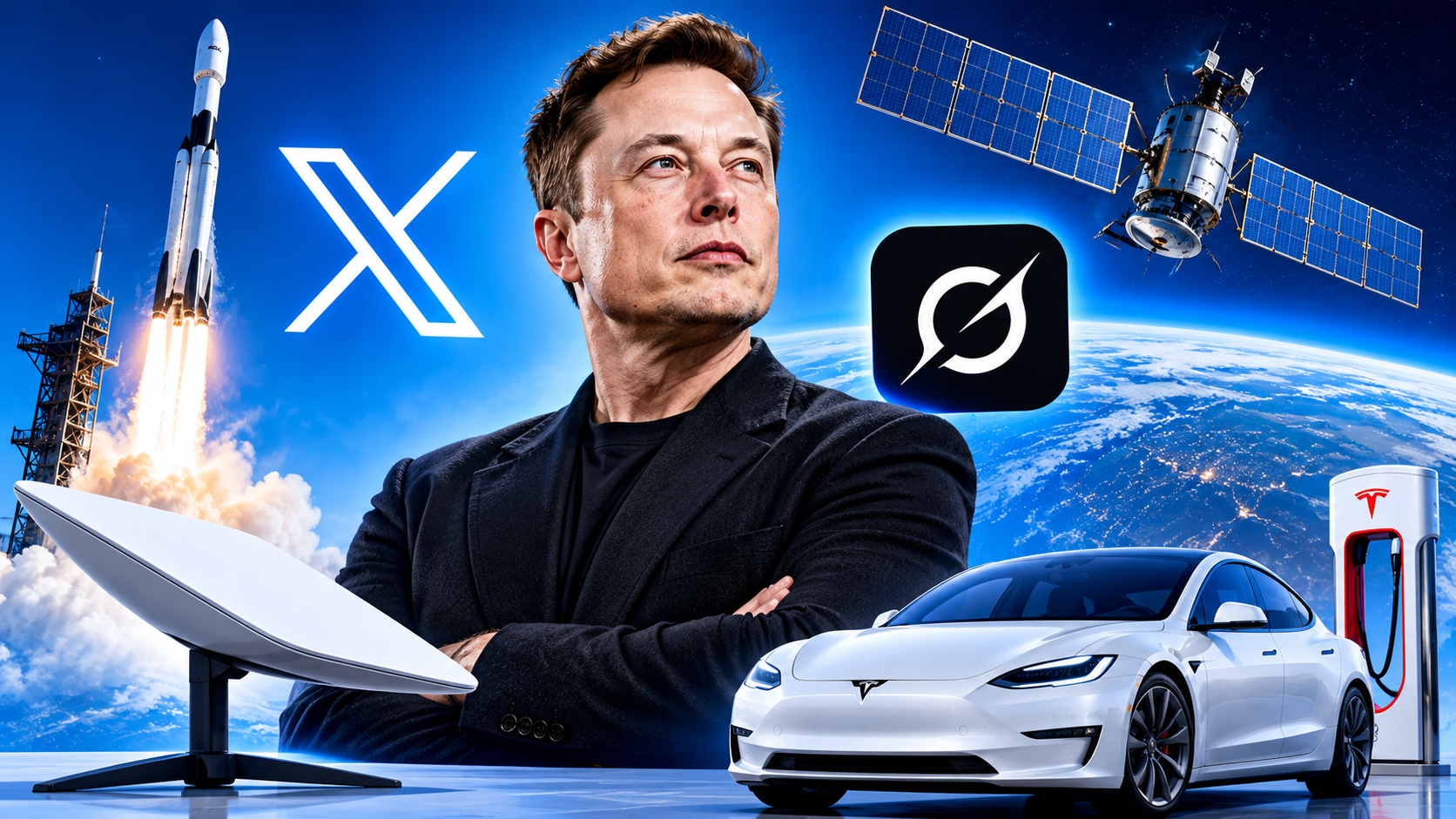
SpaceX trades on Nasdaq as SPCX near its $135 offer price, despite a 161% jump in quarterly revenue and a swing to profit. This article lays out the bull case, what a Tesla merger could mean for shareholders, and the risks any fair analysis must weigh.
Five months after the largest stock market debut in history, SpaceX is no longer a private company that only insiders could own. It trades on Nasdaq under the ticker SPCX, it has reported its first profitable quarter as a public company, and its board is studying a possible combination with Tesla. Supporters of the stock point to a set of concrete reasons why it could reward long-term holders. This article explains those reasons, using reported figures, and also sets out the risks that any fair analysis has to include.
A record IPO and a stock that has already been tested
SpaceX listed on Nasdaq on June 12, 2026, at $135 per share, a price that valued the company at about $1.77 trillion. The shares closed their first day at $161, up 19%, according to CNBC. The ride since then has been bumpy: the stock rose to about $211 the following week, then fell back below its offer price within roughly a month. On November 4, 2026, SPCX closed at $135.92, close to where it started, with a 52-week range of about $105 to $226 and a market value near $1.9 trillion, according to market data published by The Motley Fool.
For investors who believe in the long-term story, this matters. Much of the early IPO excitement has already been priced out, and the stock is trading near its offer price even though the company's results have since improved sharply.
Reason 1: Revenue is growing at a pace rarely seen in a company this large
SpaceX reported third-quarter 2026 results on October 20. Revenue reached about $14.6 billion, up 161% from about $5.6 billion a year earlier and well above the roughly $12.7 billion analysts expected, according to reports by SpaceQ, The Motley Fool and Yahoo Finance. For comparison, the company's registration statement showed revenue of $18.7 billion for all of 2025. In a single quarter, SpaceX now earns close to what it earned in most of last year.
Management also guided first-quarter 2027 revenue to $33 billion to $37 billion, far above the consensus estimate of about $22 billion cited by SpaceQ. Guidance is not a guarantee, but it shows how quickly management expects the business to scale.
Reason 2: The company has turned profitable
In 2025, SpaceX lost about $4.9 billion. In the third quarter of 2026, it reported net income of about $4.4 billion and income from operations of about $2.8 billion, compared with an operating loss a year earlier. Adjusted EBITDA was about $8.8 billion, a margin above 60%, according to SpaceQ's breakdown of the results.
Investors should note one nuance: roughly $1.6 billion of that net income came from items outside core operations, such as other income and a tax benefit. Even so, the move from heavy losses to an operating profit in a few quarters is one of the main arguments supporters make.
Reason 3: Starlink, a growing subscription business
Starlink, the satellite internet service, remains the company's most reliable profit engine. Connectivity revenue rose 69% year over year to about $5.2 billion in the third quarter and produced most of the group's operating income. Consumer subscribers reached about 13.6 million, up from 7.2 million a year earlier, and the service is now available in 174 markets. Business and government revenue grew 91%. About 12,000 commercial aircraft have been contracted for Starlink connectivity, according to SpaceQ and Yahoo Finance.
Subscription revenue tends to be recurring and predictable, which is why many analysts see Starlink as the foundation that supports the company's riskier bets.
Reason 4: Exposure to artificial intelligence infrastructure
Since absorbing xAI in early 2026, SpaceX also runs an AI division, now called Super Intelligence. In the third quarter, it brought in about $7.6 billion, more than half of total revenue, driven mainly by cloud computing contracts. The company reported a backlog of about $63 billion at the end of the quarter, about $42 billion of it due within a year, according to Yahoo Finance. Earlier in 2026, SpaceX disclosed large compute contracts with AI developers such as Anthropic and Google.
For an investor, this means one share of SPCX offers exposure to satellite internet, space launch and AI computing at the same time, a combination no other listed company offers.
Reason 5: Starship and the launch business
SpaceX still dominates commercial launch, and Starship could change the cost of reaching orbit. Flight 14, in late September 2026, reached orbit for the first time and deployed 26 next-generation Starlink V3 satellites. Flight 15, expected in November, will try to catch both the booster and the upper stage, and Space.com has reported that the vehicles completed pre-launch engine tests. Elon Musk has cautioned that "success is not guaranteed on these first flights." If full reuse works, supporters argue, Starship could lower costs for Starlink, NASA missions and commercial customers for years.
Reason 6: Institutional interest and index inclusion
SPCX was added to major indexes such as the Nasdaq-100 shortly after listing, which brings steady demand from index funds. Analysts' 12- to 18-month price targets published in the summer ranged from $190 to $800, with a median of about $225, according to figures compiled on Wikipedia's page about the IPO. Cathie Wood's ARK funds bought about 348,000 shares, worth about $47 million, in early November, according to Stocktwits. Targets and fund purchases are opinions, not promises, but they show that professional investors see room for growth.
The possible SpaceX–Tesla merger
On the third-quarter earnings call on October 20, Musk said that "both SpaceX and Tesla have formed special committees to discuss this idea at the request of shareholders." The committees are made up of independent directors because Musk leads both companies. He also said the committees "have not reached agreement on the terms of any transaction" and that there is no guarantee they will, according to 24/7 Wall St.
Here is what is known and what is not:
- No terms, exchange ratio or premium have been announced. Nothing is certain.
- Tesla said a merger would need approval by a majority of all outstanding Tesla shares, which Musk called "quite a high hurdle." Tesla's December 3, 2026 annual meeting does not include a merger vote.
- At October 20 prices, SpaceX was worth about $2 trillion and Tesla about $1.5 trillion, so a combined company could be worth more than $3 trillion, with SpaceX holders likely owning the larger share, according to 24/7 Wall St.
- The two companies are already linked: Tesla invested about $2 billion in xAI, which became part of SpaceX in February 2026.
- Views differ. Investor Gene Munster put the chance of a combination within two years at 95%, while wealth manager Mark Tepper said he does not see it happening. Analysts quoted by Stocktwits warned that political scrutiny could slow any deal.
What a merger could mean for people who own SPCX before it happens
Because no terms exist, the effects can only be described in general terms, based on how large stock-for-stock mergers usually work:
- Conversion of shares. In an all-stock deal, SPCX shares would be exchanged for shares of the combined company at a fixed ratio. Owners would not need to buy anything new; their exposure would simply change.
- A broader business. Holders would own a slice of electric vehicles, energy storage, robotaxis and humanoid robots in addition to Starlink, launch and AI. Some investors see that as added diversification; others see it as dilution of a business they chose on purpose.
- Premium or discount. The exchange ratio decides who gains. If the ratio favors SpaceX, holders could benefit; if it favors Tesla, SpaceX holders could see their share of value diluted. In all-stock deals, a premium can also shrink if the buyer's shares fall before closing, as investor Gary Black has warned.
- Price swings around news. SPCX rose about 8% in after-hours trading on the night the committees were mentioned. Merger headlines, filings and votes could move the stock sharply in both directions.
- A long timeline. Shareholder votes, regulatory review and political scrutiny could take months or years, and the deal could be abandoned.
- Governance. Musk holds about 82% of SpaceX's voting power through super-voting shares, so ordinary shareholders have limited influence over the outcome.
Risks every reader should weigh
- Valuation. Even after the drop, SPCX trades at a very high multiple of sales. Morningstar called the IPO price "significantly overvalued" and set a fair value of about $780 billion, far below today's market value.
- Heavy spending. Capital expenditures were about $19.6 billion in the third quarter, and management guided $35 billion to $40 billion for the fourth quarter, mostly for AI. Cash fell 10% in the quarter to about $89.9 billion.
- Contract risk. Some major AI compute contracts carry 90-day termination clauses.
- Lock-up expirations. Large blocks of insider shares are being released for sale in stages, which can pressure the price.
- Execution risk. Starship tests can fail, and AI demand may not grow as fast as projected.
- Key-person and governance risk. The company depends heavily on Elon Musk, who controls the vote.
Bottom line
The case for SpaceX rests on rapid revenue growth, a newly profitable business, Starlink's recurring income, exposure to AI infrastructure and the potential of Starship. The possible Tesla merger adds both opportunity and uncertainty: it could create one of the most valuable companies in the world, but terms, timing and even whether it happens at all are unknown. Whether these factors make SPCX a good fit depends on each investor's goals, time horizon and tolerance for risk.
This article is informational only and does not constitute financial advice.
Sources
- SpaceX IPO takeaways: SPCX closes at $161, jumping 19% after record debut , CNBC (2026-06-12)
- SpaceX Q3 2026: AI passes Starlink as SpaceX turns a profit , SpaceQ (2026-10-26)
- SpaceX Q3 Sales Rose 161% in Q3 , The Motley Fool (2026-10-23)
- SpaceX Q3 Earnings: AI Now Brings in Half the Revenue, Starlink Still Earns Most of the Profit , Yahoo Finance (2026-10-21)
- SpaceX earnings live updates , Yahoo Finance (2026-10-21)
- Tesla and SpaceX Just Formed Special Committees to Weigh a Merger , 24/7 Wall St. (2026-10-21)
- TSLA Stock Slips Overnight: Analysts Flag Political, Premium Risks To SpaceX Merger , Stocktwits (2026-11-05)
- SpaceX fires up Starship upper stage ahead of landmark Flight 15 test launch , Space.com
- Initial public offering of SpaceX , Wikipedia