
What Bitcoin Is and How It Works, From the 2008 Whitepaper to 2026
A pseudonymous paper proposed payments without a bank; 18 years later, the network runs on proof-of-work, trades well below its peak, and draws scrutiny over energy and policy.
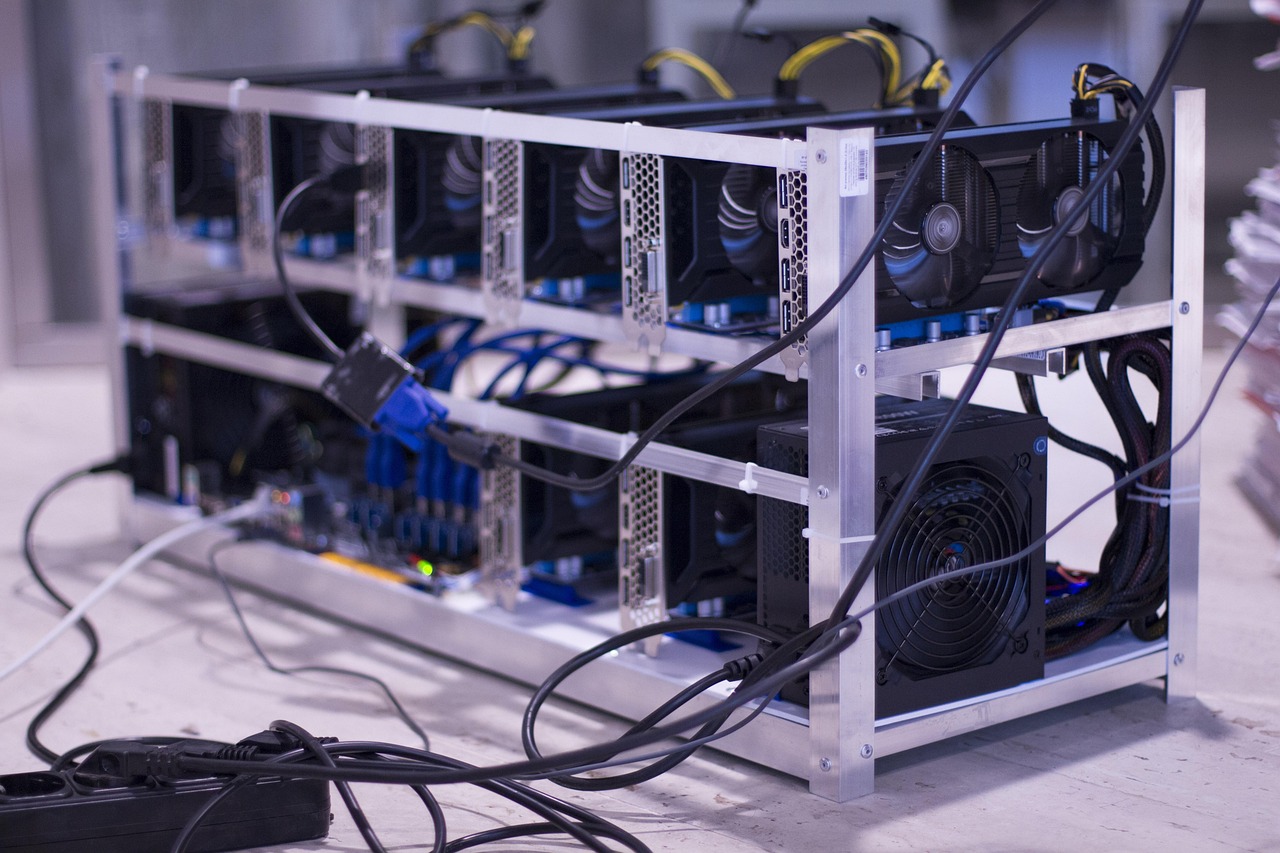
Bitcoin is a peer-to-peer payment network and public ledger described in a 2008 paper by Satoshi Nakamoto. This explainer covers how signatures, mining and difficulty adjustment work, what the network costs in electricity, who uses it, and where the US government stands as of November 1, 2026.
Bitcoin is a payment network and shared record of transactions that lets one party send value directly to another without a bank or payment company in the middle. It was described in a 2008 paper by an author using the name Satoshi Nakamoto, and it relies on digital signatures and a computing-intensive process called proof-of-work to keep anyone from spending the same coin twice.
The idea matters because it has grown from a mailing-list proposal into an asset with a market value of roughly $1.57 trillion, according to Coinbase's price page on November 1, 2026. It also now touches energy markets, household finance and federal policy. At the same time, much of what is said about Bitcoin is loose or inflated, so the mechanics, the numbers and the open questions are worth separating.
Where Bitcoin came from and the problem it targeted
A paper titled "Bitcoin: A Peer-to-Peer Electronic Cash System" was published on October 31, 2008, under the name Satoshi Nakamoto. According to the text of the paper, it proposed online payments sent directly from one party to another without going through a financial institution. The industry site Bitstamp reports that Nakamoto announced it the same day in an email to the Cypherpunk mailing list under the subject line "Bitcoin P2P e-cash Paper."
Nakamoto's identity remains unknown. Wikipedia's summary adds that the paper was not peer-reviewed, that academics initially ignored it and some argued it could not work, and that Hal Finney received the first bitcoin transaction, ten coins from Nakamoto, nine days after the release. Those details come from a secondary source, and the dates should be checked against the mailing-list archives before being treated as settled.
The double-spending problem
The paper's central concern is double-spending, meaning the same unit of money being paid to two different recipients. Nakamoto wrote that digital signatures solve part of the problem of electronic cash, but that a trusted third party is still needed to stop double-spending. Traditionally, that third party is a bank or payment processor that keeps the authoritative books.
The paper's answer was to replace the trusted party with a peer-to-peer network. It defined an electronic coin as a chain of digital signatures and specified a proof-of-work system, similar to Adam Back's Hashcash, to operate a distributed timestamp server. In plain terms, the network as a whole, rather than one institution, agrees on the order in which payments happened.
How the mechanics fit together
Signatures, the ledger and the chain
Each transfer of value is authorized with a digital signature, and the chain of signatures is what the whitepaper treats as the coin itself. Transactions are recorded in a public ledger, which people call the blockchain. Because the ledger is shared rather than held by a single company, anyone on the network can in principle check the same record.
The research reviewed for this article did not include the technical documentation for how keys are generated, how nodes validate blocks, or how the fixed supply is enforced. Those details are left out here rather than guessed, and readers who want them should consult the Bitcoin developer documentation directly.
Mining and proof-of-work
Mining is the process that keeps the shared record in order. A common description says miners create coins by solving complex math puzzles, but that is a loose simplification. The work is repeated trial-and-error hashing: computers make enormous numbers of guesses at a block puzzle, and the reward paid to the successful miner is set by protocol rules rather than by any negotiation.
Two terms describe the scale of that guessing. Hashrate is the total computing power the network devotes to the guesses. Difficulty is the protocol's tuning parameter for how hard those guesses are. The two move together in practice, since more computing power would otherwise find answers faster.
Difficulty adjustment keeps the pace steady
According to the mining-news site Pickaxe, a source of low reliability in the research, the protocol retunes difficulty every 2,016 blocks to aim for one block roughly every ten minutes. This self-adjustment is why a surge in mining hardware does not simply speed up the network. When more computing power arrives, difficulty rises at the next retarget; when power leaves, it falls.
October 2026 offers a live example. MillionMiner reported that the October 3 retarget changed difficulty by -0.03%, to 132.72 trillion. BlockOps Mining reported that on October 16 it rose 5.92% to 140.58 trillion, the highest since early March but about 10% below the record of 155.97 trillion set on October 29, 2025. BlockOps attributed the climb to cooler weather ending summer curtailment, a better price bringing marginal capacity back, and hashrate passing 1 zettahash per second.
These figures come from industry blogs that likely draw on the same underlying data, so they are consistent but not independent. OneMiners estimated before the fact that the October 29 retarget would add about 6%, to roughly 149 trillion, but the actual outcome was not confirmed in the research. Daily hashrate readings also vary from page to page, which is why only the rounded figure of about 1 zettahash per second is used here.
The smallest unit
One bitcoin divides into 100 million units called satoshis, so a satoshi is 1/100,000,000 of a bitcoin. That figure appears in a 2016 arXiv preprint, which has not been peer reviewed, though the division itself is basic and widely documented. The small unit matters because a single bitcoin is worth tens of thousands of dollars at current prices, and most people transact in fractions.
Price and network size on November 1, 2026
Exchange tickers on November 1, 2026 put the price near $77,900. Coinbase showed $77,871.50 and CoinGecko showed $78,074.52. Coinbase lists the all-time high as $126,210.50, reached on October 6, 2025, which puts the current price about 38% lower. Coinbase also showed the price about 3% below its level a week earlier.
| Measure | Value | Source |
|---|---|---|
| Price | About $77,900 | Coinbase, CoinGecko |
| All-time high | $126,210.50 (October 6, 2025) | Coinbase |
| Gap versus all-time high | About -38% | Coinbase |
| Circulating supply | 20,105,365 BTC | Coinbase |
| Market capitalization | About $1.57 trillion | Coinbase |
These tickers agree with one another, but they reflect one market and draw on the same trading data, so they count as a single snapshot rather than independent confirmation. A quote from one day also goes stale quickly, and nothing here should be read as a forecast. The only trend that the numbers support is a narrow one: the price is well below where it stood about a year earlier.
The electricity question
Because proof-of-work turns computing into a cost, Bitcoin uses real electricity. The most-cited estimate comes from the Cambridge Bitcoin Electricity Consumption Index, run by Cambridge's Centre for Alternative Finance. According to a CoinMarketCap Academy summary, the index has been revised downward before: the 2021 estimate fell from 104 to 89.0 terawatt-hours (TWh), the 2022 estimate from 105.3 to 95.5 TWh, and the 2023 estimate stood at 70.4 TWh.
Later figures are higher. Changelly, citing Cambridge's 2025 Digital Mining Industry Report, put consumption at about 138 TWh per year, roughly 0.54% of global electricity, and said the estimate rose 17% because hashrate growth outpaced efficiency gains. Other pages, including a Spark glossary entry and a GreenCalculus explainer, cite annualized figures of roughly 170 to 180 TWh for late 2025 into 2026.
The gap between 138 TWh and the later figures is not necessarily a contradiction. A survey-based industry report and a daily model are different measures, and the index page itself was not retrieved for this article, so the current number should be checked there. What the sources support is an order of magnitude, around half a percent of the world's electricity in the 2025 report, rather than a precise figure.
Why any single number is soft
Uncertainty is wide even in the best-known index. A 2021 arXiv preprint on the method reported a range from 33.66 to 226.24 TWh around a best guess near 90 TWh. Estimates also depend on method: surveys of miners, hardware-based models and price-based models produce different answers.
Consumption also moves with conditions. Price, weather-related curtailment, hardware efficiency and miners shifting capacity to other work all change hashrate, so an annual total hides swings within the year. The October 2026 difficulty rise, which BlockOps tied partly to cooler weather and a better price, illustrates the point.
For the United States specifically, Changelly relayed an estimate from the Energy Information Administration that US-based mining used 25 to 91 TWh in 2023, or 0.6% to 2.3% of US electricity. The original EIA report was not retrieved, so that range should be treated as relayed. Comparisons with whole countries, a favorite device in headlines, also deserve care: matching a country's electricity use does not mean Bitcoin has the same economic, social or environmental impact as that country, as Changelly itself notes.
Who uses Bitcoin, and how Washington treats it
Adoption among US adults
The best US adoption data come from the Pew Research Center. Its January 2026 survey found that 19% of US adults have ever invested in, traded or used cryptocurrency, and Pew describes use as fairly stable over the years. Its 2021 survey had found 16%, and a secondary source reports 17% in late 2024.
Pew's analysis found a shift in who is using crypto. Republican use rose from 16% in 2021 to 22%, now above Democrats, whose share held at 17%. Secondary summaries of the 2026 survey report a wide gender gap, 27% of men versus 11% of women, and higher use at upper incomes, but those breakdowns were not checked against Pew's own tables.
Two limits matter. Pew's question covers all cryptocurrencies, not Bitcoin alone, and it asks about lifetime use, so it does not show how many people hold Bitcoin today. A figure of about 10% for 2025 from the Federal Reserve's household survey, cited by Financer, measures current use or holding and so does not conflict with Pew's 19%. The overall picture is steady rather than explosive adoption, including through a period of sharp price swings.
Confidence in the technology is another matter. The American Institute for Boys and Men, summarizing a 2024 Pew survey, reports that 63% of adults had little or no confidence in the reliability and safety of ways to invest in, trade or use crypto, and 39% of investors said the same. That figure comes from a secondary summary, so Pew's original should be consulted.
The US Strategic Bitcoin Reserve
The main federal development is Executive Order 14233, signed on March 6, 2025. According to a Thomson Reuters Practical Law summary, it created a Strategic Bitcoin Reserve and a separate Digital Asset Stockpile for other cryptocurrencies seized in federal criminal proceedings. CryptoSlate reports that it was published in the Federal Register on March 11, 2025, at 90 FR 11789, and Fibo-Crypto reports that bitcoin placed in the reserve shall not be sold.
The reserve is not an open-market buying program and is not backed by an act of Congress, according to The Block, which said that as of July 2026 no open-market purchase had been confirmed. Holdings are estimates: Wikipedia puts the federal government at about 328,372 BTC as of February 2026, and a news site valued that at about $25 billion. Blofin, citing the analytics firm Arkham, gives about 325,000 BTC in tagged wallets, of which roughly 106,000 BTC was finally forfeited and unclaimed.
Sources disagree on whether the reserve really exists. CoinDesk reported in March 2026 that it did not yet exist and that the Treasury lacked authorization to build the accounts, while other outlets say it was established. The most careful reading is that the order is in force, but formal accounts and purchases have not been implemented, and the 328,372 figure is an estimate rather than a Treasury inventory.
Congress has begun to act. Coinpedia reports that on September 16, 2026, the House Financial Services Committee advanced the American Reserve Modernization Act by a vote of 28 to 21. The bill would formalize Treasury custody, set a minimum 20-year holding period and require public proof-of-reserve reporting; as of September 28 it remained at committee stage. Abroad, Blofin, a single weak source, reports that El Salvador holds roughly 7,663 BTC, has paused purchases under an IMF facility and removed legal-tender status for bitcoin, claims that still need confirmation from the IMF and the Salvadoran government.
What to take from it
The core of Bitcoin is well documented: a 2008 design that replaces a trusted intermediary with signatures, a shared ledger and costly computation, and a protocol that tunes its own difficulty to hold a steady pace. Everything built on top of that design is less settled. Electricity estimates carry wide error bars, adoption is steady rather than surging, and the largest government holder rests on an executive order rather than a statute.
Several things are worth watching: whether the reserve bill moves beyond committee, whether Treasury ever builds the accounts the order describes, and how the Cambridge index and primary network dashboards read after the autumn rise in hashrate. These are checkable, and each will say more about Bitcoin's role than any single day's price.
Frequently asked questions
Who created Bitcoin?
The 2008 whitepaper was published under the name Satoshi Nakamoto, and the person or group behind that name remains unknown. Wikipedia notes the paper was not peer-reviewed and was initially dismissed by some academics.
What is a satoshi?
A satoshi is the smallest unit of Bitcoin, equal to 1/100,000,000 of one bitcoin. One bitcoin divides into 100 million satoshis.
How does Bitcoin prevent double-spending without a bank?
The whitepaper proposes a peer-to-peer network that uses digital signatures and a proof-of-work timestamp system, so that participants collectively agree on the order of transactions. That replaces the trusted third party that digital signatures alone would still require.
How much electricity does Bitcoin use?
Estimates vary by method. Cambridge's 2025 industry report, as relayed by Changelly, put it at about 138 TWh per year, roughly 0.54% of global electricity, while some later secondary pages cite 170 to 180 TWh. The Cambridge index has also been revised downward for past years.
Does the US government own Bitcoin?
The federal government is estimated to hold roughly 325,000 to 330,000 BTC from seizures, though this is not an official Treasury inventory. A March 2025 executive order created a Strategic Bitcoin Reserve, but as of July 2026 The Block reported no confirmed open-market purchases, and a bill to formalize it had only cleared committee as of late September 2026.
Sources
- Bitcoin: A Peer-to-Peer Electronic Cash System , Satoshi Nakamoto (mirror by git.dhimmel.com) (2008-10-31)
- Bitcoin Whitepaper , Bitstamp
- Bitcoin , Wikipedia
- Hypothetical Problems concerning the Theory of Relativity on Cryptographic Currency Implementations , arXiv (2016-04-01)
- Bitcoin Mining: Difficulty Adjustment Oct 16 2026 , Pickaxe (2026-10-16)
- Bitcoin Mining Update October 2026: Hashrate, Hashprice & ASICs , MillionMiner (2026-10-01)
- Bitcoin Mining Difficulty Jumps 5.92%: October 2026 Impact - BlockOps Mining , BlockOps Mining (2026-10-16)
- Bitcoin Difficulty Up 6% on 29 Oct: What It Means , OneMiners (2026-10-26)
- Bitcoin (BTC) Price USD Today, News, Charts, Market Cap , Coinbase (2026-11-01)
- Bitcoin Price: BTC/USD Live Price Chart, Market Cap & News Today , CoinGecko (2026-11-01)
- Cambridge University's Updated Bitcoin Electricity Consumption Index Reveals Lower Energy Consumption , CoinMarketCap Academy
- How Much Electricity Does Crypto Mining Use? , Changelly
- Bitcoin Mining Energy Consumption - Spark Glossary , Spark
- Cambridge Bitcoin Electricity Consumption Index (CBECI) , GreenCalculus
- Factors determining maximum energy consumption of Bitcoin miners , arXiv (2021-07-01)
- About 1 in 5 Americans have used crypto; Republicans' use has ticked up , Pew Research Center (2026-06-08)
- 16% of Americans say they have invested in, traded or used cryptocurrency , Pew Research Center (2021-11-11)
- Why Only 19% of US Adults Have Ever Used Crypto , CryptocurrencyHelp
- Young men and cryptocurrency: What the evidence shows , American Institute for Boys and Men (2026-01-01)
- Crypto Adoption Statistics US 2026 , Financer (2026-01-01)
- White House Issues Executive Order to Establish National Strategic Bitcoin Reserve and Digital Asset Stockpile , Thomson Reuters Practical Law (2025-03-07)
- US Strategic Bitcoin Reserve: EO 14233 Explained , CryptoSlate (2026-06-04)
- US Strategic Bitcoin Reserve: One Year Later, 2026 Assessment , Fibo-Crypto (2026-03-01)
- What Is the U.S. Strategic Bitcoin Reserve? , The Block (2026-07-07)
- US Strategic Bitcoin Reserve established as long-term national asset under executive order , CryptoBriefing (2026-07-01)
- Those who cheered U.S. Bitcoin reserve have spent year watching Trump order languish , CoinDesk (2026-03-06)
- Strategic Bitcoin Reserve: How the US Reserve Works and Where It Stands in 2026 , Blofin (2026-09-01)
- U.S. Strategic Bitcoin Reserve: Seized Holdings, Zero Confirmed Purchases and the 2026 Legislative Status , Coinpedia (2026-09-28)
- U.S. Strategic Bitcoin Reserve , Wikipedia
This article was drafted with the help of AI and reviewed by Jaroha editors before publication.