
The touchscreen MacBook Pro runs M5 chips, not M6: what to know before buying
Apple's first touch Mac ships November 6 at a $400 premium, and the chip story is not what early headlines suggested.
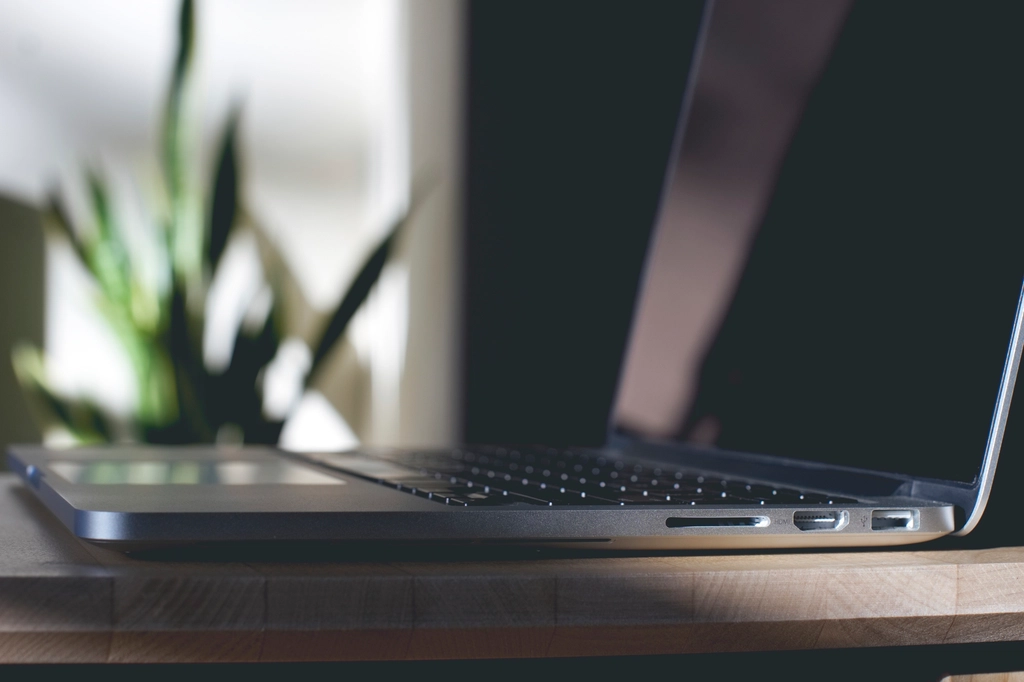
Apple's touchscreen MacBook Pro uses M5 Pro or M5 Max chips, while the M6 appeared in a separate non-touch model. Touch is an add-on to a pointer-based macOS, and the price and timing questions hinge on reviews that do not exist yet.
Apple's first touchscreen Mac does not have an M6 chip. According to Apple's October 28, 2026 press release, the MacBook Pro with PROLED XDR Display uses M5 Pro or M5 Max processors. The M6 arrived a day earlier in two different products: a separate, non-touch 14-inch MacBook Pro and a 24-inch iMac.
That correction shapes the buying question. Touch is the feature drawing attention, but it arrives bundled with an OLED display, a lighter body and a redesigned hinge, and Macworld puts the list price at $400 above an equivalent non-touch model. Pre-orders are open and shipping begins November 6, yet independent reviews and benchmarks do not exist because the machines have not reached customers.
What Apple announced, and where the M6 fits
Apple's release describes an all-new MacBook Pro with PROLED XDR Display, built on tandem OLED technology, and states that Touch comes to Mac for the first time. The headline specifications are M5 Pro and M5 Max performance, up to 24 hours of battery life and a thinner, lighter design. TechRepublic, reporting from Apple's listings, says pre-orders opened October 28 in 30 countries and regions, including the United States, with availability from November 6. Macworld gives the same dates.
The M6 product came first. Macworld's live coverage reports that the 14-inch M6 MacBook Pro and the iMac were announced on October 27 at unchanged starting prices of $1,999 and $1,499. MacRumors and Macworld both report Apple's claims of up to 30 percent faster graphics and up to 25 percent faster AI workloads than M5. The machine looks like the previous generation and keeps the same Liquid Retina XDR display, so it is a chip refresh rather than a redesign.
The pre-launch rumor mill was a source of the confusion. Several earlier reports, including pieces from Cult of Mac and Hardware Busters, predicted M6 Pro and M6 Max touch models and even a different product name. Neither prediction held. Apple's actual naming keeps the MacBook Pro label, and the chips are from the M5 family.
The 5x AI claim belongs to the iMac
The figure that circulated alongside the touchscreen news, up to 5x faster on-device AI, is not a MacBook Pro claim. Apple's iMac release, as reproduced by MacDailyNews, says the M6 iMac is up to 5x faster than the M4 iMac and up to 12x faster than the M1 iMac on one task: prompt processing in LM Studio. Macworld notes that the comparison spans two chip generations in a single refresh.
An "up to" number reflects a best-case result on a named test, and a speedup on one task does not mean everything involving AI runs five times faster. No independent test of the iMac claim turned up in the research for this article. For the M6 MacBook Pro, the comparable Apple claim is up to 25 percent faster AI workloads than M5, measured against a much closer baseline.
What touch actually does on a Mac
What Apple and pre-launch reporting describe
Apple's product page says the display brings Multi-Touch gestures to the Mac. Beyond that, the most detailed account of the software comes from before the launch. Bloomberg's Mark Gurman, as relayed by MacRumors on October 25, reported that the next macOS, called Golden Gate, uses a dynamic interface that adapts depending on whether the user has recently been touching the screen or using the trackpad.
In that account, touching a button can bring up a menu around the finger, and the Dock and Menu Bar are tuned for touch. Touch is positioned as a third input method alongside the keyboard and trackpad rather than a replacement for either. This was a report from anonymous sources made before Apple's announcement, so it describes intent more than verified behavior.
Early hands-on impressions
Hands-on coverage from a short press event in Los Angeles points the same way. Fonearena's impressions describe touch as a complement, not a conversion to a tablet: the keyboard and large trackpad remain, and macOS is still built around a pointer. The outlet found some menus and controls small for finger input.
The hinge matters more than usual for a screen that people will tap. Gizmodo's hands-on says Apple is touting a stiffer hinge and observes that current MacBook Pro models tend to bounce when tapped. Fonearena reports that the redesigned hinge reduces wobble but that harder jabs still produced some. A smaller blog, TechEBlog, describes the value of touch input as a question mark.
These impressions are brief and may reflect what Apple chose to show. They cannot say how often owners will reach for the screen after the first week, or how many third-party apps will respond well to a finger. The research found no data on app support, and TechRepublic's mention of app compatibility could not be read in detail.
A reversal of old Apple thinking
Gizmodo notes that Steve Jobs disliked touchscreens on Macs and called the idea ergonomically terrible at a 2010 event; the exact wording has not been confirmed against a primary source here. Analyst Ming-Chi Kuo wrote in September 2025 that the shift reflects Apple's long-term observation of how people use the iPad, which is interpretation rather than established fact.
The description "first touchscreen MacBook" also needs a qualifier. It is the first Mac with a touchscreen, but the Touch Bar, a small touch strip above the keyboard, appeared on MacBook Pro models released between 2016 and 2022, according to PhoneArena's history. PhoneArena also notes that competing laptop makers have offered touchscreens for years, so Apple is late to the category rather than creating it.
Beyond touch: display, weight, hinge and battery
Touch is only one change in the package, and no source can separate its value from the others. The more tangible differences are the display and the body. The display is the tandem OLED panel. TechRepublic, citing Apple's specifications, lists up to 2,000 nits of peak HDR and SDR brightness, a 10,000,000:1 contrast ratio, and P3 and Adobe RGB color gamuts. Apple's product page separately lists up to 1,000 nits of sustained full-screen brightness. These are manufacturer figures, not measurements.
The touch models also have a Dynamic Island, which Tom's Guide's live coverage says handles Spotlight, Live Activities and Siri AI and replaces the notch. Hands-on reports agree that the screen looks vivid and the machine feels lighter.
The weight difference is documented in Apple's specifications. Per Apple's product page and an AppleInsider comparison, the 14-inch touch model with M5 Pro starts at 3.0 lb, against 3.5 lb for the non-touch comparison. The 16-inch weighs 4.0 lb with M5 Pro and 4.1 lb with M5 Max, against 4.7 lb for the non-touch 16-inch. That is a reduction of roughly 0.5 to 0.7 lb.
Battery claims are no better than before. Apple says up to 24 hours with M5 Pro and up to 22 hours with M5 Max, the same as the non-touch models. The company's test used preproduction 16-inch units with M5 Pro, 48GB of memory and 2TB of storage, browsing 25 websites over Wi-Fi. How an OLED laptop with a touch interface holds up under ordinary use is untested.
Performance is the area where Apple has said least. Macworld's guide reports no claimed speedup over an equivalent non-touch M5 configuration. The M5 Pro and M5 Max chips were released in March, so buyers of the touch models receive silicon that is already about seven months old.
What it costs compared with non-touch models
TechRepublic's report of Apple's listings gives the US starting prices for the touch models, shown below. The brief does not include list prices for non-touch M5 Max configurations, so no comparison is drawn for those.
| Configuration | 14-inch | 16-inch |
|---|---|---|
| M5 Pro, PROLED XDR touch | $2,899 | $3,399 |
| M5 Max, PROLED XDR touch | $4,499 | $4,799 |
Macworld puts the touch premium at $400 over an equivalent non-touch M5 Pro or M5 Max model. Gizmodo's reporting is consistent: it says $2,899 is a $400 jump over the current 14-inch and cites $2,999 as the current 16-inch starting price. iClarified, reporting on Gurman, lists $2,499 as the starting price of the current 14-inch high-end models. By comparison, the non-touch M6 14-inch starts at $1,999, according to Macworld.
Recent pricing history adds context. MacRumors' guide says Apple raised Mac prices in June 2026, with MacBook Pro prices up by at least $300. It also says the $1,999 M6 starting price matches the outgoing model's current US starting price, not that model's original launch price. A flat sticker on the M6 model therefore follows an increase rather than a return to older levels.
The chip roadmap and the case for waiting
What Gurman reports about M7
Anyone hoping to wait for a faster chip faces a long road if Bloomberg's Mark Gurman is right. According to MacRumors' October 15 report, Apple is skipping M6 Pro, M6 Max and M6 Ultra entirely. The OLED models would keep the M5 Pro and M5 Max with no chip upgrade planned until 2027, with M7 Pro and M7 Max arriving for the high-end touch models at the end of next year. Gurman also places an M7 low-end MacBook Pro next year and an M7 Ultra in the first half of 2028. iThinkDiff repeats the same podcast comments, which is not independent confirmation.
This roadmap rests on one source and Apple has confirmed none of it. Gurman's record is mixed in a useful way: his October timing, M5 chip and $2,899 pricing predictions matched the final announcement, but earlier reports from other outlets about M6 touch models were wrong. Macworld, for its part, says M6 Pro or M6 Max are not expected until 2027, which differs from Gurman's claim that they will never be made. The Gurman account is more specific and more widely repeated, but the disagreement is unresolved.
Cheaper touch, older models and the buying guides
Kuo has said the second-generation affordable MacBook, expected in 2027, might have a touchscreen. That is a single-analyst rumor, and given the track record of earlier leaks, it carries limited weight. Gurman separately says the existing mini-LED models remain in the lineup for now but will eventually be discontinued.
Macworld's buying guide describes the current choice as the entry-level 14-inch M6, the non-touch M5 Pro and M5 Max models, and the touch M5 Pro and M5 Max models. Its main case against buying a touch model is for people who want a processor upgrade, since the touch models carry the same chips as their non-touch equivalents. Gurman's own assessment, relayed secondhand by the Mac Observer, is that Apple refined its existing laptop design rather than producing something revolutionary.
How the trade-offs line up
The reporting supports a few context points, not a verdict. Each depends on what a buyer values:
- Buying now may suit someone who needs a laptop soon and wants the OLED display or the lower weight, accepting that chip upgrades could be more than a year away if the reported roadmap holds.
- A non-touch model offers the same M5 chip for about $400 less, which matters if touch is not a priority.
- The entry-level M6 14-inch is the only model with the newest chip, at a $1,999 starting price, but it has the older Liquid Retina XDR display and no touch.
- Waiting for reviews costs only days, since shipping starts November 6 and the first independent tests should follow.
What to watch after November 6
Touch on the Mac is best understood as a bet about habits. Apple has kept the keyboard, the trackpad and a pointer-first operating system, and is adding a finger as one more way to reach the screen. Whether that proves useful or merely occasional is something no pre-launch report can answer, and the early notes about small controls and residual wobble suggest the execution is still being proven.
The first round of independent reviews will test the claims that matter most: hinge stability under real taps, battery life on an OLED panel, and how macOS behaves when the screen is actually used. Beyond that, the signals to track are any Apple word on M7 and whether a cheaper touch Mac appears in 2027. Until then, the facts that hold are the ones Apple has put in writing: M5 chips, a lighter body, an OLED screen and a price $400 higher than the non-touch equivalent.
Frequently asked questions
Does the touchscreen MacBook Pro have an M6 chip?
No. Apple's touch models, called the MacBook Pro with PROLED XDR Display, use M5 Pro or M5 Max chips. The M6 appeared in a separate non-touch 14-inch MacBook Pro starting at $1,999 and in the 24-inch iMac.
When does the touchscreen MacBook Pro ship and how much does it cost?
Pre-orders opened October 28 and availability begins November 6, according to TechRepublic and Macworld. US starting prices are $2,899 (14-inch, M5 Pro), $4,499 (14-inch, M5 Max), $3,399 (16-inch, M5 Pro) and $4,799 (16-inch, M5 Max).
Is the M6 iMac really 5x faster at AI?
That is Apple's claim for the iMac against the M4 iMac, and it comes from one task, prompt processing in LM Studio. Apple compares against the M1 iMac at up to 12x on the same task. No independent test was found, and the MacBook Pro claim is smaller: up to 25 percent faster AI workloads than M5.
Will there be a faster chip for the touchscreen MacBook Pro soon?
Bloomberg's Mark Gurman, as reported by MacRumors, says M7 Pro and M7 Max are due for the high-end touch models at the end of next year, with no chip upgrade planned until 2027. Apple has not confirmed this, and it rests on a single source.
Can touch be turned off, and does it replace the trackpad?
Hands-on reports say the keyboard and large trackpad remain, and macOS is still built around a pointer, so touch works as an addition. A claim that touch can be disabled in Accessibility settings came only from a secondhand aggregator and has not been verified here.
Sources
- Apple unveils groundbreaking MacBook Pro with PROLED XDR Display , Apple Newsroom (2026-10-28)
- MacBook Pro with PROLED XDR Display , Apple
- Apple Announces New 14-Inch MacBook Pro With M6 Chip , MacRumors (2026-10-27)
- Apple unveils new M6 iMac, delivering a major boost in performance and AI capabilities , MacDailyNews (2026-10-27)
- iMac gains M6 chip and performance boost, but little else changes , Macworld
- Touchscreen MacBook Pro Guide: Release date, price and new features , Macworld
- Should you buy a MacBook Pro now? M6, touchscreen and older models compared , Macworld
- M6 MacBook Pro: Release date, price, specs and buying advice , Macworld
- Pro and Tell event live blog: Apple unveils its first touchscreen MacBook , Macworld (2026-10-28)
- Apple Unveils Touchscreen OLED MacBook Pro Starting at $2,899 , TechRepublic (2026-10-28)
- PROLED 16-inch MacBook Pro vs 16-inch MacBook Pro: Compared , AppleInsider
- MacBook Pro With PROLED XDR Display Hands-On: What Happens When Apple Defies Convention , Gizmodo (2026-10-28)
- Touchscreen MacBook Pro to Reportedly Start at $2,899 for 14-Inch, $3,399 for 16-Inch , Gizmodo
- Apple MacBook Pro with PROLED XDR Display Hands-On , Fonearena
- Apple Reportedly Announcing New MacBook Pro With OLED Touchscreen on Wednesday , MacRumors (2026-10-25)
- OLED MacBook Pro Won't Get M7 Chips Until Late 2027 , MacRumors (2026-10-15)
- Apple's Touchscreen OLED MacBook Pro: Everything We Know , MacRumors
- Apple's Touchscreen MacBook Pro to Cost 'Significantly' More [Gurman] , iClarified (2026-10-25)
- Gurman Says Apple Played It Too Safe With Its First Touchscreen MacBook Pro , Mac Observer (2026-11-01)
- Ming-Chi Kuo: Apple will add a touchscreen to the upcoming MacBook Pro with OLED display , GSMArena (2025-09-17)
- Touchscreen MacBook Pro Skips M6 and Waits for M7 Pro and M7 Max , iThinkDiff
- When is the OLED MacBook Pro releasing , PhoneArena
- Apple event LIVE: Touchscreen MacBook Pro OLED announced, iPad mini OLED and more , Tom's Guide (2026-10-28)
- 4 reasons why you should wait for the M6 MacBook Pro , Cult of Mac
- Apple Touchscreen MacBook Pro Confirmed For 2026 According To Leaks , Hardware Busters
- First Hands-On with MacBook Pro PROLED XDR Display Reveals Vivid Colors and Noticeably Lighter Weight , TechEBlog
This article was drafted with the help of AI and reviewed by Jaroha editors before publication.