
The Solar System Has 8 Planets, but the Number Rests on a 2006 Definition
The official count is eight planets and five dwarf planets, and new discoveries and old disputes keep pressing on that line.
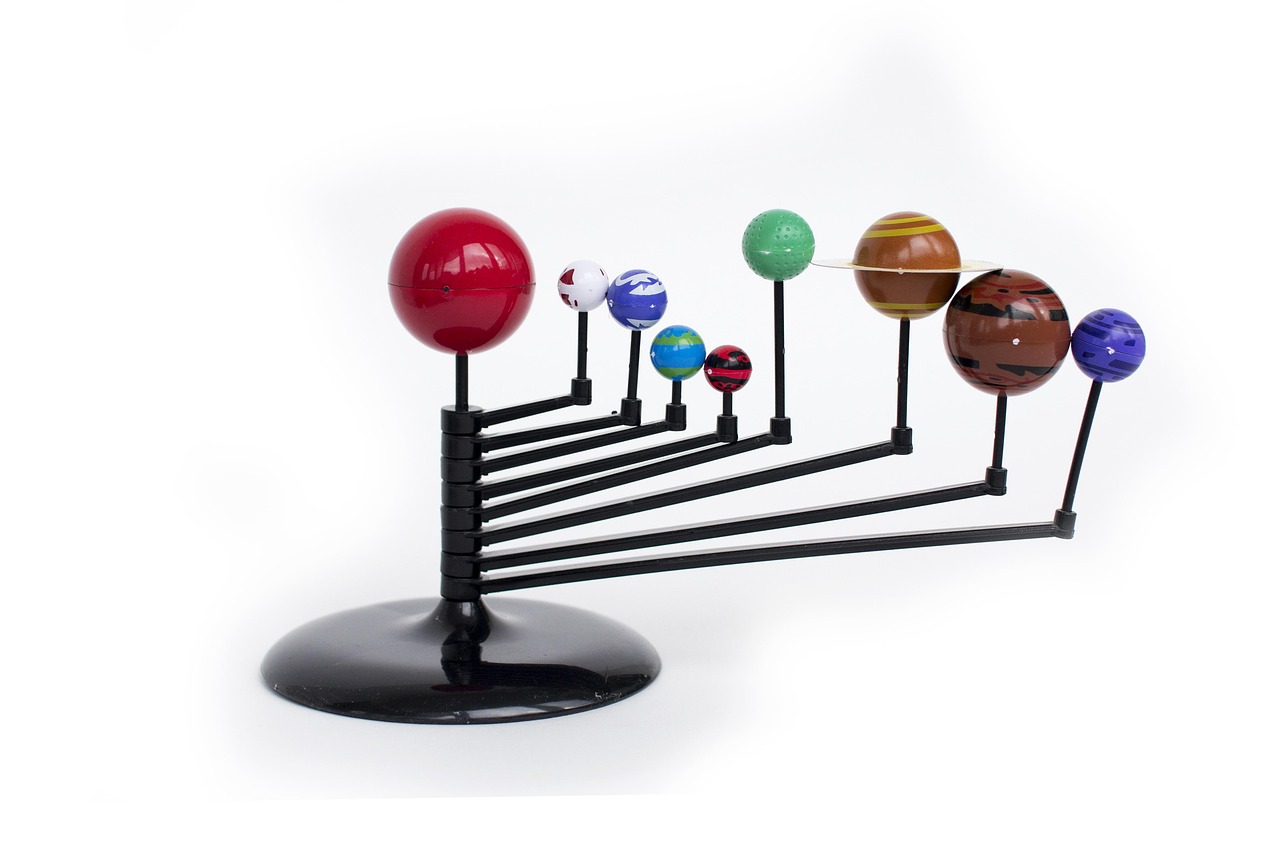
NASA and the International Astronomical Union both count eight planets and five dwarf planets. That figure depends on a 2006 vote and a definition with critics. In 2026, a new dwarf-planet candidate, debate over Pluto and the Planet Nine hunt keep the question open.
The solar system has eight planets. That is the figure used by both NASA and the International Astronomical Union (IAU), the organization that sets formal categories in astronomy. The planets are Mercury, Venus, Earth, Mars, Jupiter, Saturn, Uranus and Neptune.
The number is less simple than it sounds. It follows from a definition adopted by vote in 2006, not from a count of objects that fall naturally into two bins. Under a different definition the total would differ. In 2026 the question has returned to the news through remarks by NASA's administrator about Pluto, a new dwarf-planet candidate from the Rubin Observatory, and fresh argument over a hypothetical Planet Nine.
Eight planets, by a definition adopted in 2006
NASA's planets page states the count as eight planets and five officially recognized dwarf planets. The IAU's own 2006 resolution, known as Resolution B5, lists the same eight planets from Mercury through Neptune. Two independent official bodies therefore agree, and no credible source in the research disputes that eight is the official figure.
The word "official" matters here. Astronomers did not measure their way to eight. They agreed on what the word planet should mean and then applied it to the objects known at the time. That distinction explains why the number can be argued about even though the observations themselves are not in dispute.
The three tests
According to the IAU resolution, a planet in the solar system must meet three conditions. It orbits the Sun. It is massive enough to be nearly round. And it has cleared the neighbourhood around its orbit, meaning it dominates the region it travels through rather than sharing it with many similar bodies.
A dwarf planet, as the IAU wording is reproduced in an arXiv paper on the definition, meets the first two tests but has not cleared its neighbourhood and is not a satellite of another body. The third test is what separates the two categories, and it is also the most criticized part of the definition.
How the vote went
The definition was not the first attempt. The AAS Division for Planetary Sciences recounts that a committee of 19 planetary scientists failed to agree on a definition in 2005. A draft defined a planet simply as a round object orbiting a star, which would have produced 12 planets in the solar system. That draft was revised after a week of heated discussion at the 2006 meeting.
The IAU's account of the vote says the main planet definition, Resolution 5A, was not formally counted but passed with a great majority. The resolution that placed Pluto in a new category passed 237 to 157, with 17 abstentions. The research did not turn up the size of the IAU's membership or the share of astronomers who attended, so how representative the vote was cannot be judged from these sources.
Reclassification has precedent. An arXiv paper on confusion over the IAU definition notes that Ceres, discovered in 1801, was first treated as a planet, and that Pluto was placed on the planet list after its discovery in 1930. NASA describes Pluto as long considered the solar system's ninth planet. The paper is of modest authority, so the history is best read as background rather than settled detail.
Why Pluto is a dwarf planet, and why the argument continues
Pluto fails only the third test. It orbits the Sun and, by the IAU's reading, is round, but it shares its region beyond Neptune with many other bodies. The IAU press release on the 2006 votes says Pluto was named a dwarf planet and the prototype of a new category of trans-Neptunian objects, bodies that orbit the Sun beyond Neptune.
The dispute has not gone away. NBC News reported on the 20th anniversary of the decision that some people still cannot let go of Pluto's old status. The Smithsonian reported that NASA Administrator Jared Isaacman voiced support for restoring Pluto's planet status during a Senate budget hearing and said NASA was preparing papers to move the discussion forward in the scientific community. NBC paraphrased his stance as wanting to make Pluto a planet again; that is the outlet's phrasing, not a verified transcript, and the exact date of the hearing could not be confirmed.
What critics of the definition say
Objections come in two main forms. A critique reported by Sci.News argues that the IAU definition is not quantitative, since it gives no measurable threshold for what counts as having cleared an orbit, and that it leaves out planets around other stars. The same report describes a proposed alternative under which a body would be a planet if it orbits stars, brown dwarfs or stellar remnants, exceeds 10^23 kg and is below 13 Jupiter masses. The IAU's formal definition covers only our solar system.
A second line of argument concerns what should matter physically. A May 2026 summary on EnviroLink says supporters of restoring Pluto contend that geophysical characteristics should count for more than orbital dynamics. That is a general summary from a weak source, and the research did not retrieve the underlying scientific papers. Nor did it find a survey showing how planetary scientists as a group are split, so the balance of expert opinion remains unknown here.
Five dwarf planets, and perhaps many more
The IAU has officially recognized five dwarf planets: Ceres, Pluto, Haumea, Makemake and Eris. NASA adds that the IAU expects there may be more than a hundred still waiting to be discovered. Official recognition and actual existence are different things, because many distant bodies are too poorly measured to show whether they are round.
That gap explains why larger numbers circulate online. A hobby site, Go-Astronomy, lists 19 dwarf planets it calls widely recognized but not universally accepted. It has no official standing, so 19 should not be read as an official count. Another site names Gonggong, Quaoar and Sedna as candidates awaiting classification, though that point is only loosely corroborated.
The newest candidate: 2026 ED138
On October 27, 2026, the IAU's Minor Planet Center announced a dwarf-planet candidate spotted by the Vera C. Rubin Observatory, according to a SLAC press release. The object, 2026 ED138, orbits about 46 au from the Sun, compared with Pluto's average of about 40 au. Rubin recorded it 30 separate times on 20 nights between March 4 and July 11, and Matthew Holman identified it on October 13, 2026, using a search code he built with Kevin Napier.
Preliminary analysis places it among the largest dwarf-planet candidates beyond Neptune, but its size is unresolved. Universe Today says up to 1,500 km, while another outlet gives a range of 600 to 1,500 km. Infrared observations are needed to pin down the size and confirm what kind of object it is. If confirmed, it would be the sixth known dwarf planet, which means it does not change the official five for now.
A second candidate, 2017 OF201, appears in an arXiv preprint by Cheng, Li and Yang. It has an extremely wide orbit and an estimated diameter of about 700 km. The retrieved text says the paper was submitted to The Astrophysical Journal Letters, and its peer-review status could not be confirmed.
A growing census beyond Neptune
Universe Today defines a trans-Neptunian object as a body orbiting the Sun beyond Neptune's average distance of about 30.1 au. Counts differ by catalog. The Brighter Side of News reports that NASA JPL's Small-Body Database listed 8,291 such objects as of October 28, 2026, a figure the research reached only through that secondary article. Universe Today reports that the Minor Planet Center has 1,006 numbered objects with well-determined orbits and more than 4,000 with provisional designations. Different catalogs apply different criteria, which probably accounts for the gap, though the sources reviewed do not spell this out.
The census is likely to grow. The SLAC release says Rubin's Legacy Survey of Space and Time began in June 2026. Before it started, the team submitted observations of more than 11,000 new asteroids in April, including about 380 new trans-Neptunian objects.
| Measure | Value | Date and source |
|---|---|---|
| Planets | 8 | NASA, 2026 |
| Officially recognized dwarf planets | 5 | NASA, 2026 |
| Asteroids | about 1.4 million | NASA solar system inventory |
| Comets | about 4,000 | NASA solar system inventory |
| Planetary moons | more than 300 | NASA solar system inventory |
| Trans-Neptunian objects in JPL's database | 8,291 | As of Oct. 28, 2026, via The Brighter Side of News |
| Trans-Neptunian objects numbered by the Minor Planet Center | 1,006 | 2026, via Universe Today |
| Trans-Neptunian objects with provisional designations only | more than 4,000 | 2026, via Universe Today |
Planet Nine: a hypothesis, not a planet
Astronomy magazine reports that Planet Nine was proposed in 2016 to explain a clustering of orbits among distant Kuiper Belt objects. The proposed world would have five to ten times Earth's mass. No one has directly observed it, and it is not part of any official count. Physics Today describes the astronomy community as divided, and Matthew Holman said he is unsure which way the evidence leans.
Evidence that weakens the case
A Conversation article, republished by ScienceDaily on June 8, 2026, discusses a sednoid called 2023 KQ14, nicknamed Ammonite. Its orbit is stable, which the article says suggests no large planet, including a hypothetical Planet Nine, is significantly disturbing its path. The other three known sednoids also have stable orbits, so any Planet Nine would have to be very far away. A lower-quality secondary source says Japanese researchers see the mismatch as weakening the clustering argument without ruling the planet out.
The 2017 OF201 preprint points the same way. Its authors say the object's orbit lies outside the clustering and challenges the dynamical evidence for Planet Nine. Because that paper's peer review is unconfirmed, it counts as a claim to be checked rather than a settled result.
Searches and a tentative infrared candidate
A Pan-STARRS1 search paper on arXiv says a large majority of the predicted region has been ruled out, but significant regions remain unobserved to the needed depth. It also says a more massive and more distant version would be fainter and harder to find. The retrieved excerpt did not show the authors, and its language suggests they may be proponents, so its framing deserves caution.
In October 2026, ZME Science and other outlets described a faint object found by comparing two infrared surveys, IRAS and AKARI, taken 23 years apart. The researchers do not claim a discovery, and ZME says the team stresses it has not found Planet Nine in any definitive way. The reports disagree on key details such as distance and mass, so those specifics are left out here until the primary paper can be read.
How the number could change
Several paths could alter what is counted, and they work differently. A new object such as 2026 ED138 could be added to the dwarf-planet list after measurement and an IAU decision. A planet-sized body that is detected and tracked, such as a real Planet Nine, would force a different kind of change. A rewrite of the definition itself, such as restoring Pluto, would require the IAU to act.
Rubin is widely expected to be the test of Planet Nine. According to secondary reports of a June 2026 interview, Konstantin Batygin said Rubin discoveries would provide a direct test of all lines of evidence for the hypothesis. Scientific American quoted Mike Brown: "If the clustering is there, Planet Nine is there." Both men are proponents of the hypothesis, and independent assessments are thin in the material reviewed.
The most important missing evidence, as of October 2026, is a reliable series of observations showing one object moving along an orbit around the Sun. A convincing negative would be an independent Rubin sample of distant objects that shows no clustering once observational selection is accounted for. Whether the clustering is real or an artifact of where telescopes have looked remains unresolved in these sources. The survey is only months old, and a clear negative could take years.
What the count really measures
Eight is a reliable answer to the question of how many planets the IAU recognizes. It is a weaker answer to the question of how many worlds of planetary scale orbit the Sun, because that depends on where a line is drawn and on objects still being found. The arrival of Rubin turns a slow trickle of discoveries into a steady flow, which will test the definition's third criterion with more cases than astronomers have ever had.
What to watch is not a headline but a process: infrared measurements of 2026 ED138, tracked orbits of distant objects, and any formal move by the IAU. The research found no confirmation that the IAU has scheduled a new vote on the definition. Until the organization acts, the official tally stays at eight planets and five dwarf planets.
Frequently asked questions
How many planets are in our solar system?
Eight, according to both NASA and the International Astronomical Union: Mercury, Venus, Earth, Mars, Jupiter, Saturn, Uranus and Neptune. The figure follows from the IAU's 2006 definition of a planet.
Is Pluto a planet?
Officially, no. The IAU classified Pluto as a dwarf planet in 2006, and NASA's pages still list it that way. NASA's administrator has voiced support for restoring its planet status, but only the IAU can change the classification, and it has not done so.
How many dwarf planets are there?
The IAU officially recognizes five: Ceres, Pluto, Haumea, Makemake and Eris. NASA says the IAU expects there may be more than a hundred waiting to be discovered. Larger counts on some websites are unofficial lists.
Is there a ninth planet?
No ninth planet has been observed. Planet Nine is a hypothesis proposed in 2016 from the orbits of distant Kuiper Belt objects, and the evidence in 2026 is mixed. Rubin Observatory's survey is expected to provide a strong test.
Sources
- RESOLUTION B5 Definition of a Planet in the Solar System , International Astronomical Union (2006-08-24)
- IAU 2006 General Assembly: Result of the IAU Resolution votes , International Astronomical Union
- What is a Planet? , AAS Division for Planetary Sciences (2006-10-11)
- IAU PLANET DEFINITION: SOME CONFUSION AND THEIR MODIFICATIONS , arXiv
- About the Planets , NASA Science
- Pluto & Dwarf Planets , NASA Science
- Solar System Exploration inventory counts , NASA Solar System Exploration
- NSF–DOE Vera C. Rubin Observatory reveals its first dwarf planet candidate in our solar system , SLAC National Accelerator Laboratory (2026-10-27)
- The Rubin Observatory Finds Its First Dwarf Planet Candidate , Universe Today
- Beyond Neptune: 8,291 objects and new discoveries , The Brighter Side of News
- Discovery of a dwarf planet candidate in an extremely wide orbit: 2017 OF201 , arXiv
- 8 Planets & 19 Dwarf Planets , Go-Astronomy
- How Many Planets Are in the Solar System? 8 Planets and 5 Dwarfs , Solaresistema
- 20 years after Pluto was made a dwarf planet, some still can't let go , NBC News
- Could Pluto Once Again Be Considered a Planet? New Remarks From NASA's Administrator Highlight an Enduring Debate Among Scientists , Smithsonian Magazine
- Astronomers Propose New Definition of Planet , Sci.News
- Scientists Debate Whether Pluto Should Reclaim Its Status as Ninth Planet , EnviroLink Network (2026-05-08)
- Have astronomers found Planet Nine? , Astronomy
- What's up with Planet Nine? , Physics Today
- A Pan-STARRS1 Search for Planet Nine , arXiv
- Planet nine mystery deepens as new discovery challenges hidden planet theory , ScienceDaily (2026-06-08)
- Astronomers May Have Found the First Direct Hint of Planet Nine , ZME Science
- If Planet Nine Exists, We'll Find It Soon , Scientific American
This article was drafted with the help of AI and reviewed by Jaroha editors before publication.