
Quest Diagnostics Breach: What Is Confirmed and What Patients Can Do
Quest has confirmed unauthorized access to a lab-ordering system, but not which data, how many people, or whether test results were involved.
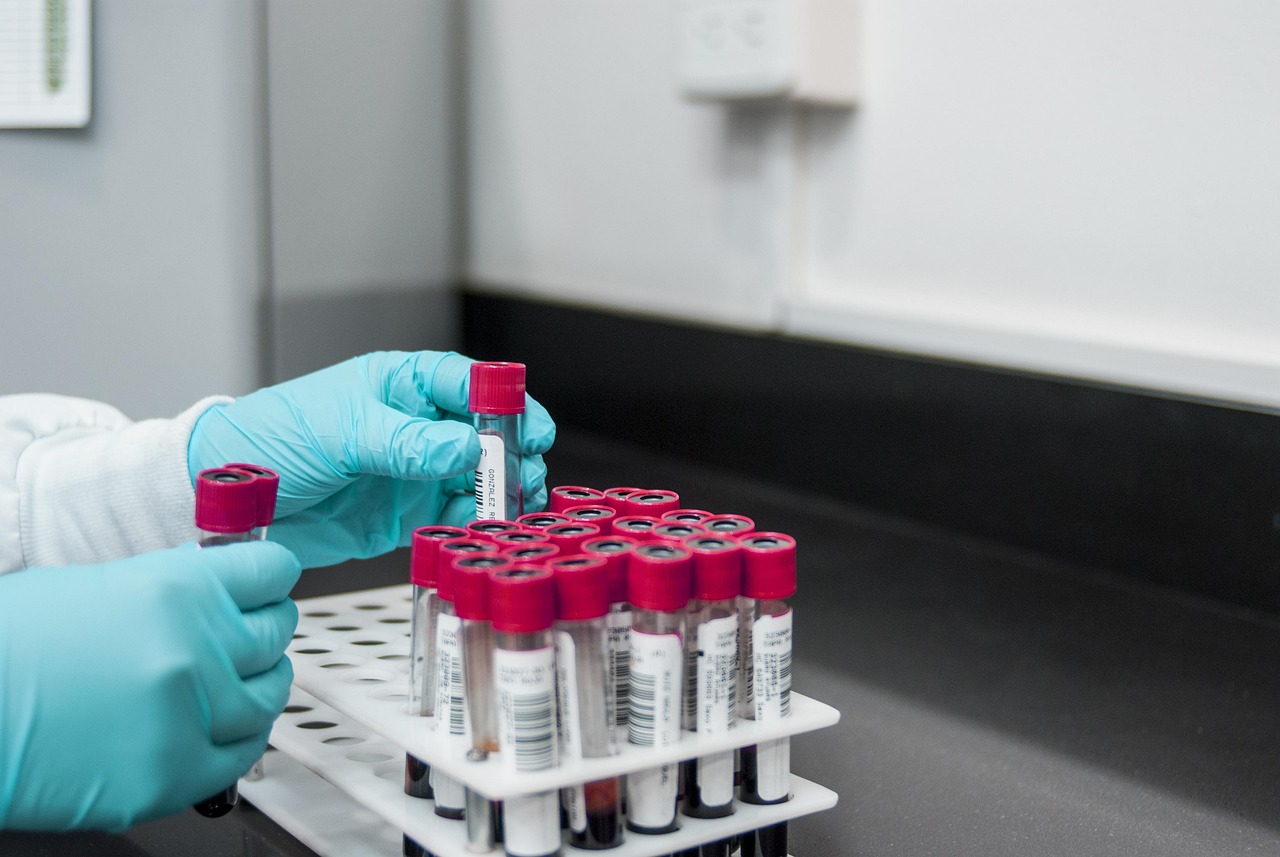
Quest Diagnostics says someone accessed its Quanum LSM system on or around October 21, 2026, and that personal or health information was part of it. The company has not said which data fields or how many people are involved. This guide separates what is confirmed from what is not and sets out the FTC's general steps.
Quest Diagnostics has confirmed that an unauthorized party gained access to Quanum LSM, a system that certain clients use to place test orders and to receive and look up results. The company has also said that protected health information or personally identifiable information was part of that access. What it has not said is which data fields were involved, how many people are affected, or whether lab results were among the records.
That gap matters for anyone wondering how to respond. Reports that 'lab results were exposed' go further than Quest's own statements, and having used Quest in the past does not mean a person's records were in the affected system. The practical steps that follow come mostly from general Federal Trade Commission (FTC) breach guidance, which applies to many kinds of data exposure and does not depend on the exact details of this one.
What Quest has confirmed so far
According to Quest's Form 8-K filed with the Securities and Exchange Commission, the company learned of unauthorized access to Quanum LSM on October 21, 2026. The filing lists that date as the earliest event, and the company's later quarterly report refers to the 8-K filed on October 22, 2026. BleepingComputer quoted the filing's description of the system as one that certain clients use to place test orders and to receive and look up results.
Quest's own web notice says it believes some patient data inside Quanum LSM was accessed and that other systems were not affected. The company says it is still working to determine exactly which data was involved. A secondary report from Rescana, quoting Quest's FAQ, says personal information and patient records were affected, and MedicalDaily repeats that wording.
On response, Rescana reports that as of 8:00 a.m. Eastern on October 26, Quest said it had remediated the incident, restored the system securely and made it available to clients again, and that core business operations were not affected. HealthExec reports that Quest told the SEC it had notified federal law enforcement and engaged outside cybersecurity experts. Quest also said the incident had not materially disrupted its business or its ability to serve patients, according to Top Class Actions.
What is still unknown
Nearly all coverage traces back to a single primary source, Quest's filing and web notice. TechCrunch, the Associated Press, BleepingComputer and the aggregator sites restate it, and repetition is not independent confirmation. No independent forensic analysis has been published, and no statement from law enforcement, the Department of Health and Human Services or an attacker has surfaced in the sources reviewed.
- Number affected: not disclosed.
- Data fields: MedicalDaily reports that Quest has not listed them, and coverage notes that the disclosure did not establish that Social Security numbers, financial information or particular test results were exposed.
- Timing and demands: TechCrunch reports that Quest did not say when the intrusion began or whether any hacking group has made demands.
- Responsibility: HIPAA Journal notes that no threat group appears to have claimed the attack.
- Entry method: not disclosed. One minor security blog notes that it is unclear whether stolen clinic logins, a software flaw or something else was used.
Wording deserves care as well. Quest's language is that data was 'accessed.' Some outlets say it was 'taken,' while another notes it is unknown whether anything was copied or removed. Until Quest or investigators say more, 'accessed' is the term the evidence supports.
Who is plausibly affected
Quanum LSM is a clinician-facing system. It is not the consumer patient portal that individuals use to view their own results. Clients such as clinics use it to order tests and look up results, so the records inside belong to patients of those clients. One source points out that many of those patients may never have logged in to anything at Quest themselves.
For scale, an AOL summary of Quest's own Quanum page says about half a million clinicians at thousands of locations use the Quanum platform. That figure describes the platform overall, not the LSM system specifically, so it works as an upper-bound context figure rather than a count of victims. HIPAA Journal, in an assessment that is an inference rather than a tally, judged the breach unlikely to match the scale of Quest's 2019 incident because only certain customers use the affected system.
How people are likely to be told
Quest says it will notify the patients and providers it determines were affected and will report to the relevant regulatory authorities. It describes itself as the covered entity under HIPAA, the federal health privacy law, that will make notifications as required by applicable law. That suggests letters could come from Quest rather than from a patient's own clinic, though the company has published no timeline.
Two cautions apply. The research for this article did not retrieve the HHS text of the HIPAA Breach Notification Rule, so no specific legal deadline is stated here. And the FTC's Health Breach Notification Rule, which carries its own timeline, covers businesses that are not subject to HIPAA. Because Quest identifies itself as a HIPAA covered entity, that FTC rule should not be read as governing its notices.
Steps worth taking now
The FTC's guidance for breach victims, hosted at IdentityTheft.gov, is written for data breaches in general. Its confidence is high as general advice. How well each step fits this incident is less certain, since the exposed fields are unknown. The steps below are researched context, not personal, legal or financial advice.
Wait for an official notice and treat unsolicited contact with suspicion
Consumer-focused outlets, including AOL and The Hack Academy, advise caution with unexpected calls, texts or emails that mention the breach and ask for a Social Security number, insurance details or a payment. Their suggested response is to verify the request through a contact already known to belong to the provider before sharing anything. This is common-sense guidance from secondary sources. No Quest-specific scam reports had turned up in the research at the time of writing.
Read insurance statements and bills closely
FTC guidance on medical identity theft suggests checking Explanation of Benefits forms from a health insurer for irregularities and reviewing medical records for errors. It also advises noticing bills that stop arriving, which could mean a thief changed the billing address. If a mistake turns up, the FTC says to write to the provider to report errors in the record and to send an FTC Identity Theft Report to the health insurer's fraud department.
Records can be checked directly, too. Text in a Federal Register notice from the FTC, in sample breach-letter language, states that people have a right under HIPAA to access their medical records. That is FTC rulemaking text rather than HHS victim guidance, which the research did not retrieve.
Credit freezes and fraud alerts
The FTC describes a credit freeze as free to place or lift, available to anyone for any reason, and unaffected in its effect on a credit score. It stays in place until the consumer lifts it. While a freeze is on, nobody can open a new credit account in that person's name. A freeze is placed by contacting all three bureaus: Equifax, Experian and TransUnion.
A fraud alert is a different tool. The FTC says an initial alert is free, lasts one year and is placed by contacting just one of the three bureaus. People who have actually experienced identity theft can obtain an extended alert lasting seven years. The FTC's breach guidance says a freeze or credit review is most relevant when a Social Security number was exposed, so a notice that lists a Social Security number or date of birth is the clearest trigger.
| Tool | Cost | Duration | How to place it | Effect |
|---|---|---|---|---|
| Credit freeze | Free | Until lifted | Contact all 3 bureaus | Blocks new credit accounts |
| Initial fraud alert | Free | 1 year (renewable) | Contact 1 bureau | Lender must verify identity |
| Extended fraud alert | Free | 7 years | Requires an identity theft report | Same as above, for longer |
Free services and reporting misuse
The FTC advises taking advantage of free credit monitoring or identity theft insurance if a breached company offers it. Nothing Quest has published so far says whether it will offer such services or for how long. Misuse of personal information can be reported through the FTC's breach page at identitytheft.gov/databreach, which also lays out recovery steps.
Why health data is treated differently
A stolen card number can be cancelled and replaced within a day. Health information is harder to reset, and it can be misused in ways that a credit freeze does not address. The research brief supports three categories of risk, with different levels of backing.
Medical identity theft
The best-supported risk comes from the FTC, which warns that an identity thief could try to use someone's medical benefit information to get care. In that scenario a victim might face bills for services never received or errors in the medical record. The FTC's recovery steps, such as correcting records and notifying the insurer's fraud department, exist for that reason.
Targeted phishing and sensitivity
Two other risks are widely stated but were not backed by primary evidence in this research. One is that a scammer holding real details, such as a provider's name or a recent test, could write a more convincing message. The other is that information about a person's health cannot be changed the way a password can. Both are reasonable concerns, but the available sources do not measure how often either leads to harm.
By the FTC's description, a freeze blocks new credit accounts. Read literally, that means it would not stop fraudulent medical billing or phishing messages. That is an inference from the FTC's description of the tool, not an FTC statement, and it should be confirmed with an expert source.
Quest's history and the wider pattern
This is not Quest's first breach. According to the Associated Press, as carried by NBC News, a 2016 incident exposed lab results and contact information for about 34,000 people. In 2019, hackers breached the systems of AMCA, a billing vendor, between August 2018 and March 2019 and gained access to protected health information of approximately 11.9 million Quest patients, as reported by HIPAA Journal and the AP.
TechCrunch calls the 2026 incident Quest's second known major breach in a decade. That tally depends on how 'major' is defined, since the 2016 incident is also on record. The 2019 case involved a vendor rather than Quest's own system, which is a reminder that records can be exposed through third parties.
How common are health data breaches?
Several compilers of data from the HHS Office for Civil Rights breach portal, which was not accessed directly for this article, put the number of large healthcare breaches reported in 2025 at roughly 700 to 800. Those are breaches affecting 500 or more people. Compliancedocshq reports that about 80.9% of 2025 reports involved hacking or IT incidents, and that a business associate was present in 35.1% of them.
The same compiler reports that the median 2025 breach affected 4,824 individuals, while 12.1% of reports crossed 100,000. Total victim counts are far less settled. HIPAA Journal's compilation gives 139,721,832 individuals, while other compilers range from about 61.6 million to about 140.5 million. Plausible reasons include different snapshot dates, placeholder entries that were later revised, and varied handling of archived or under-investigation entries. Direction is clear, but exact totals are unresolved.
Lawsuits
Top Class Actions, a legal-marketing site with a commercial interest in such cases, reports that multiple class action lawsuits have been filed in New Jersey federal court. That claim comes from a single secondary source and was not checked against a court docket, so case details are not repeated here.
What to watch next
The most telling developments will be concrete ones. Quest's notification letters should show which data types were involved, and an entry on the HHS breach portal may eventually give a victim count, though such entries can start with a placeholder figure and be revised upward. Forensic findings would clarify whether data was only viewed or was copied, whether any extortion followed, and how the attacker got in.
Until then, the evidence supports a measured stance rather than alarm. Quest reports no spread to other systems and no material business disruption, and having used the company does not mean a person is affected. Because health information cannot be reissued like a card number, the lasting habit worth keeping is routine attention: reading insurance statements and medical bills closely, and treating any unexpected message that cites the breach as unverified until confirmed through a known contact.
Frequently asked questions
Were my Quest lab results exposed?
That has not been confirmed. Quest says personal or health information was part of the access to its Quanum LSM system, but it has not listed the data fields. Reports note the disclosure did not establish that particular test results were exposed.
Is every Quest patient affected by the breach?
No evidence says so. The system involved is a clinician-facing tool that certain clients use to place orders and look up results, not Quest's consumer patient portal. Affected patients are most likely those whose clinicians use that system, although the actual number is unknown.
How will I find out if my information was involved?
Quest says it will notify the patients and providers it determines were affected and will report to regulators. It describes itself as the HIPAA covered entity responsible for notices. No timeline has been published, and unsolicited calls or texts about the breach should be verified through a known contact.
Should I freeze my credit after the Quest breach?
The FTC says a credit freeze is free, does not affect a credit score and blocks new credit accounts until lifted. It is most relevant if a notice shows a Social Security number or date of birth was exposed. A freeze addresses credit fraud, not medical billing fraud or phishing.
What is medical identity theft, and how can it be spotted?
The FTC describes it as someone using medical benefit information to get care. Warning signs include unfamiliar entries on Explanation of Benefits forms, bills for services never received, bills that stop arriving, or errors in medical records. The FTC recommends reporting errors to the provider and sending an Identity Theft Report to the insurer's fraud department.
Sources
- An update on an incident involving one of our systems (Quanum notice) , Quest Diagnostics (2026-10-26)
- Quest Diagnostics Inc. Form 8-K (earliest event October 21, 2026) , U.S. Securities and Exchange Commission (2026-10-22)
- Quest Diagnostics Inc. Form 10-Q for period ending September 30, 2026 , U.S. Securities and Exchange Commission
- Lab testing giant Quest Diagnostics confirms patients' personal and health data was compromised during breach , TechCrunch (2026-10-23)
- Quest Diagnostics reports cyber breach affecting 'certain patient records' , Associated Press via NBC News (2026-10-22)
- Quest Diagnostics confirms data breach exposed patient records , BleepingComputer (2026-10-23)
- Patient Data Likely Accessed in Quest Diagnostics Hack , HIPAA Journal
- Cybercriminals breach Quest Diagnostics' lab management system, gaining access to patient records , HealthExec
- Quest Diagnostics says patient records were accessed through its Quanum lab-ordering portal; the number of affected people and exposed data remain unknown , MedicalDaily
- Quest Diagnostics data breach hits patient records in lab system , Top Class Actions
- Watch Out for Scams Following the Quest Diagnostics Data Breach , AOL
- Quest Diagnostics Quanum LSM Incident: System Restored, Patient Data Scope Still Under Investigation , Rescana
- Quest flags Quanum LSM access as patient-record scope stays open , The Hack Academy
- Information Was Lost or Stolen, or Part of a Data Breach , Federal Trade Commission (IdentityTheft.gov)
- Get a credit freeze to stop identity thieves , Federal Trade Commission (2025-09-10)
- Is a credit freeze or fraud alert right for you? , Federal Trade Commission (2022-01-01)
- What To Do After a Data Breach , Federal Trade Commission
- IdentityTheft.gov: Steps, including special forms of identity theft , Federal Trade Commission
- Health Breach Notification Rule , Federal Register (Federal Trade Commission) (2024-05-30)
- HIPAA Breach Statistics: OCR Portal Data , compliancedocshq
- Largest Healthcare Data Breaches of 2025 , HIPAA Journal
- Healthcare Data Breach Report 2026: HHS OCR Data , The Uptime Report
- Healthcare Data Breach Report: What HHS OCR Data Actually Shows , packet33
This article was drafted with the help of AI and reviewed by Jaroha editors before publication.